KPV Peptide Research: The Anti-Inflammatory Tripeptide

KPV tripeptide research peptide Lys-Pro-Val anti-inflammatory molecular structure

Research Use Only. The information presented here is for scientific and educational purposes. These compounds are not intended for human consumption, self-administration, or therapeutic use.


Introduction

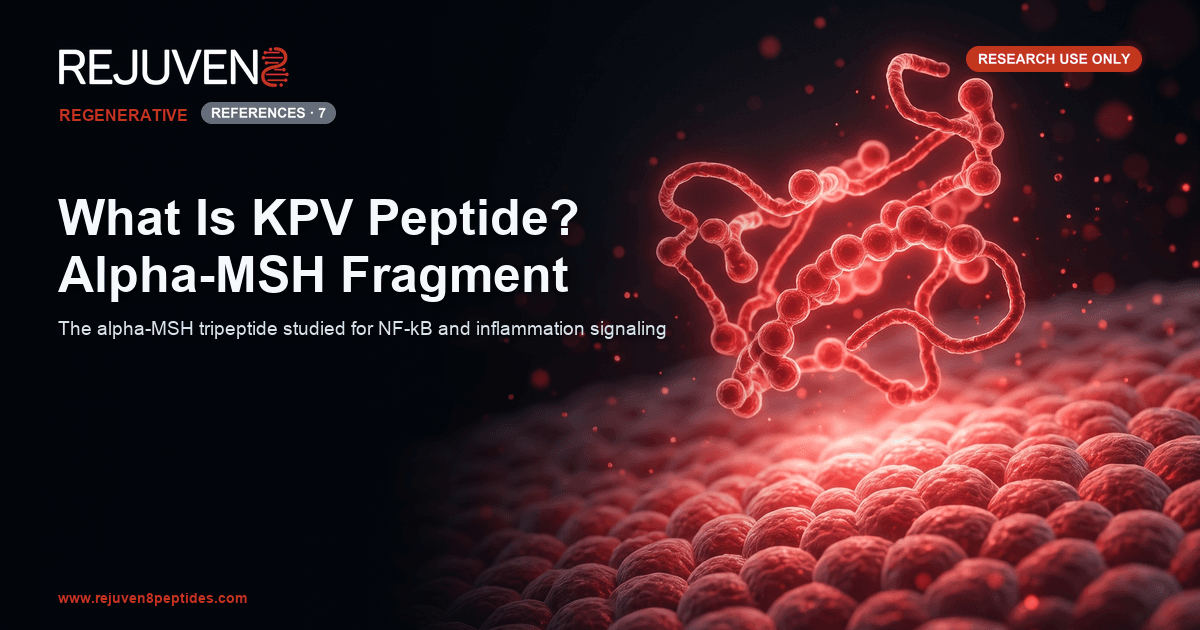
KPV — short for the tripeptide Lysine-Proline-Valine — is the three-amino-acid C-terminal fragment of alpha-melanocyte-stimulating hormone (α-MSH). It is one of the smallest peptides routinely investigated in inflammation research. The pigmentation-driving portion of α-MSH is excluded from the KPV sequence, which has allowed investigators to examine the anti-inflammatory activity of the parent hormone independently of melanocortin receptor signaling at MC1R.

Interest in KPV peptide research traces to work in the 1990s and early 2000s by groups including those of Anna Catania and James Lipton at the University of Milan and the University of Chicago, who characterized the anti-inflammatory and immunoregulatory effects of α-MSH and its C-terminal fragments across a variety of in vitro and in vivo systems. KPV has since been investigated in preclinical models of inflammatory bowel disease, dermatological inflammation, and systemic cytokine challenge.

This article reviews the published preclinical record on KPV, the proposed mechanisms of action, and the practical considerations relevant to laboratory investigators working with the tripeptide. The literature is notable for the breadth of inflammation models examined despite the peptide’s structural simplicity, and KPV has emerged as one of the better-characterized short-peptide anti-inflammatory tools in modern preclinical research.


Molecular Profile

KPV carries the amino acid sequence Lys-Pro-Val (single-letter code: KPV). It is among the smallest synthetic peptides commonly used in preclinical research, with a molecular formula of C₁₆H₃₀N₄O₄ and a molecular weight of approximately 342.43 Da. The peptide does not contain cysteine residues, has no post-translational modifications, and is conformationally simple.

KPV is highly water-soluble and is typically supplied as a lyophilized white powder produced by solid-phase peptide synthesis. The small size and simple chemistry of the tripeptide simplify handling and characterization in laboratory contexts, and high-purity material is routinely achievable.

The peptide’s tripeptide architecture has structural consequences worth noting in experimental design. The proline residue at position 2 imposes a kink in the peptide backbone that limits conformational freedom and may contribute to the peptide’s resistance to certain aminopeptidases. The N-terminal lysine carries a positive charge at physiological pH, while the C-terminal valine provides a small hydrophobic terminus — together producing a zwitterionic, modestly amphipathic species. The molecular weight (342 Da) sits at the upper end of the range typically efficiently transported by the di/tripeptide carrier PepT1, a feature mechanistically important to the gastrointestinal literature discussed below.


Mechanism of Action

The mechanistic literature on KPV has identified two non-exclusive lines of inquiry: melanocortin receptor-mediated signaling and direct intracellular anti-inflammatory effects mediated by the PepT1 transporter.

The melanocortin framework derives from the peptide’s origin as the C-terminal fragment of α-MSH. Investigators have reported that KPV interacts with melanocortin receptors (notably MC1R and to a lesser extent MC3R), producing anti-inflammatory effects through cAMP/PKA signaling and modulation of NF-κB activation. The MC1R-mediated effects are reported in both immune cells (monocytes, macrophages, keratinocytes) and certain epithelial cell populations.

A parallel and increasingly emphasized mechanism involves the di/tripeptide transporter PepT1. Dalmasso G., Charrier-Hisamuddin L., Nguyen H.T.T., et al. published in Gastroenterology (2008) reporting that KPV is internalized by intestinal epithelial and immune cells through PepT1 and that this intracellular uptake is required for the peptide’s downregulation of NF-κB and MAP-kinase inflammatory signaling pathways. The PepT1-mediated mechanism provides a framework for understanding the peptide’s reported activity in the gastrointestinal tract.

These two pathways are not mutually exclusive, and individual experimental systems may engage one, the other, or both depending on receptor and transporter expression patterns. Keratinocytes, monocytes, and dendritic cells express varying levels of MC1R and PepT1, and the relative contribution of each route to observed anti-inflammatory output has been a recurring subject of mechanistic interrogation. The picture that has emerged from successive studies is one of a small peptide with two parallel modes of action — extracellular receptor engagement and intracellular uptake — both converging on NF-κB-mediated cytokine programs and stress-response transcription.


Key Research Areas

1. Inflammatory Bowel Disease Preclinical Models

The intestinal inflammation research is the most extensively cited area of KPV peptide research. Dalmasso G., Charrier-Hisamuddin L., Nguyen H.T.T., et al. published findings in Gastroenterology (2008) demonstrating that oral administration of KPV reduced the incidence of DSS-induced and TNBS-induced colitis in mouse models. Animals receiving the tripeptide exhibited reduced proinflammatory cytokine expression (including TNF-α, IL-1β, IL-6), preserved colonic architecture, and reduced weight loss compared to vehicle controls. The authors proposed that KPV’s effects depend on PepT1-mediated uptake into both intestinal epithelial and lamina propria immune cells.

Subsequent work in this area has examined KPV in nanoparticle and hydrogel delivery systems, including studies by Laroui H., Dalmasso G., Nguyen H.T.T., et al. in Gastroenterology (2010) using poly(lactide-co-glycolide) nanoparticles for targeted intestinal delivery in murine colitis models. The nanoparticle approach was motivated by the observation that small peptides administered orally face significant degradation in the upper gastrointestinal tract; encapsulation with controlled-release release at the colonic level improved exposure of inflamed mucosa to active peptide.

Xiao B., Xu Z., Viennois E., et al. (2017), publishing in Molecular Therapy, extended this work using hyaluronic-acid-functionalized nanoparticles for CD44-targeted delivery of KPV to inflamed colonic epithelium and macrophages in DSS-colitis models. The study reported reductions in colon shortening and histopathology scores at lower effective doses than free-peptide controls, illustrating how delivery engineering can amplify the apparent potency of small peptide reagents. Kannengiesser K., Maaser C., Heidemann J., et al. (2008) independently reported KPV’s anti-inflammatory potential in murine IBD models in Inflammatory Bowel Diseases, providing useful methodological corroboration of the Emory group’s foundational work.

2. Dermatological and Skin Inflammation Research

Investigations in dermatological models have examined the C-terminal α-MSH fragment in the context of contact hypersensitivity, allergic dermatitis, and atopic dermatitis preclinical models. Work building on the broader α-MSH anti-inflammatory literature has examined KPV’s effects on cytokine output in cultured keratinocytes and immune cell populations relevant to skin inflammation. Reports include attenuation of TNF-α and IL-1β output following inflammatory challenge.

Land S.C. (2014), publishing in Experimental Dermatology, reported that KPV inhibits LPS-induced inflammatory effects in human keratinocytes through NF-κB signaling. The study used cultured primary keratinocytes and examined both transcriptional and protein-level cytokine readouts, contributing one of the better-controlled in vitro skin-inflammation profiles in the KPV literature. Brzoska T., Luger T.A., Maaser C., et al. (2008), in their comprehensive Endocrine Reviews account, summarized the broader α-MSH-derived tripeptide literature and placed KPV within the larger field of melanocortin anti-inflammatory peptides.

Investigators studying related skin-relevant research peptides may find it useful to compare KPV with copper-containing tripeptide GHK-Cu, which has its own substantial preclinical literature in dermatological models — though the two compounds operate through distinct molecular mechanisms.

3. NF-κB and Inflammatory Signaling Research

A consistent theme across the KPV literature is its effects on NF-κB signaling. The C-terminal fragments of α-MSH, including KPV, have been reported to inhibit NF-κB nuclear translocation, reduce IκB degradation, and suppress the transcription of NF-κB-responsive proinflammatory genes. The original characterization of the C-terminal α-MSH (11–13) anti-inflammatory tripeptide in the context of NF-κB signaling was advanced by work in the Catania and Lipton laboratories and has been extended by multiple subsequent groups examining both in vitro and in vivo models.

The Pharmacological Reviews overview by Catania A., Gatti S., Colombo G., and Lipton J.M. (2004) consolidated the foundational mechanistic literature on melanocortin-derived anti-inflammatory peptides and remains a primary reference for investigators entering the field. More recent work by groups including Brzoska T. and collaborators has refined the molecular picture, identifying specific phosphorylation events in the IκB kinase complex and downstream effects on AP-1 and CREB transcriptional programs in KPV-treated cells. The cumulative literature now provides a reasonably granular account of how a three-amino-acid peptide can modulate a transcription factor network as complex as NF-κB.

4. Mechanistic and Delivery Research

More recent KPV peptide research has focused on optimizing delivery systems and elucidating the cellular and tissue-level mechanisms underlying the peptide’s reported effects. Investigators have published work using nanoparticle, hydrogel, and conjugation strategies to enhance bioavailability and target delivery to the gastrointestinal tract or other tissue compartments. This translational engineering work has expanded the preclinical literature considerably in the 2010s and 2020s.

Specific delivery strategies reported in the literature include encapsulation in PLGA nanoparticles for sustained release, conjugation to hyaluronic acid for CD44-mediated targeting, embedding in polysaccharide hydrogels for colon-targeted release, and incorporation into liposomal carriers for topical applications. Viennois E., Merlin D., and colleagues have published extensively on the application of these delivery strategies in murine colitis models, and the broader field of nanoparticle-based peptide delivery has used KPV as a model small-peptide cargo because of its well-characterized activity and stable chemistry. This makes KPV an unusually useful tool peptide for delivery-system development beyond its intrinsic biological interest.


Comparative Research Landscape

KPV’s position in the broader landscape of anti-inflammatory research peptides is shaped by its origin as an α-MSH fragment, its small size, and its dual receptor/transporter mode of action. Several comparators help clarify what KPV does and does not offer as a research tool.

Within the melanocortin family, α-MSH (1–13) — the parent peptide — engages all five melanocortin receptors with varying affinity, including MC1R-mediated pigmentation and MC3R/MC4R metabolic and feeding effects. KPV (α-MSH 11–13) retains anti-inflammatory activity while shedding most of the pigmentation and metabolic effects, making it a more selective tool for inflammation research. Longer C-terminal fragments such as α-MSH (10–13) and α-MSH (6–13) sit between these extremes, with intermediate selectivity profiles. Melanotan II, a synthetic pigmentation-active analog, is mechanistically distinct from KPV despite the shared α-MSH lineage.

Among other small anti-inflammatory peptides studied in preclinical contexts, BPC-157 (a pentadecapeptide derived from a gastric protein fragment) has been investigated extensively in gastrointestinal and tissue-repair models, but its mechanism differs from KPV’s, involving growth factor and nitric oxide pathways rather than melanocortin or PepT1 signaling. Thymulin and VIP have also been studied as anti-inflammatory peptides but operate through their own distinct receptor systems. The combination of KPV’s structural simplicity, well-defined mechanism, and oral bioavailability potential (through PepT1) gives it a relatively unusual profile among research-grade anti-inflammatory peptides.

In delivery-system research, KPV is one of the most commonly used model peptide cargoes alongside insulin, calcitonin, and a handful of antimicrobial peptides. Its stability under typical formulation conditions, defined molecular weight, and well-characterized bioactivity in colitis models have made it a workhorse for proof-of-concept studies of oral peptide delivery platforms. This dual identity — bioactive peptide of intrinsic interest and model cargo for delivery research — distinguishes KPV from most other small anti-inflammatory peptides studied today.


Research Considerations for Laboratory Use

For investigators working with KPV in laboratory settings, the compound’s very small size and high aqueous solubility simplify handling. Lyophilized material should be stored at −20°C or below prior to reconstitution. Reconstituted solutions are typically prepared in sterile bacteriostatic water or 0.9% saline. Because the peptide is so small, reconstituted material should be used promptly or stored short-term at 2–8°C per supplier-specific stability data.

Research-grade KPV is typically characterized at ≥98% purity by HPLC analysis, with identity confirmed by mass spectrometry (expected molecular weight: 342.43 Da). Lot-specific certificates of analysis (CoAs) documenting purity, water content, residual solvents, and sterility are standard for research procurement. Endotoxin testing is advisable for any study involving immune-cell readouts, given the peptide’s reported activity in cytokine assays.


Research Methodology Considerations

Rigorous KPV experimental design must account for several methodology issues that arise from the peptide’s small size, its receptor/transporter dual mechanism, and the heterogeneity of preclinical models in which it has been studied.

Assay Selection and Readouts

The most commonly reported readouts in KPV mechanistic work include ELISA or multiplex panels of pro-inflammatory cytokines (TNF-α, IL-1β, IL-6, IL-8), Western blot analysis of NF-κB pathway intermediates (p65 phosphorylation, IκB-α degradation), and gene expression panels of NF-κB-responsive genes. In vivo colitis models typically employ disease activity indices, histopathology scoring, colonic length, myeloperoxidase activity, and intestinal permeability assays. Investigators reproducing the Dalmasso work should ensure intestinal epithelial cell PepT1 expression is verified in their model system, since PepT1 expression in colonic tissue is normally low but is upregulated in inflammatory conditions.

Animal Models

Murine DSS-induced colitis and TNBS-induced colitis dominate the in vivo KPV literature. Each model has distinct mechanistic features: DSS produces predominantly epithelial-injury-driven inflammation with a Th2/innate component, while TNBS engages stronger Th1/Th17 adaptive immunity through hapten conjugation to colonic proteins. KPV has reported activity in both models, but cross-comparison of effect sizes should account for the mechanistic differences. Rat models appear less frequently in the literature. Dermatological inflammation studies have used ear-edema and contact-hypersensitivity paradigms; ophthalmic inflammation models also appear in selected reports.

Dose-Ranging and Pharmacokinetics

Reported in vivo doses in murine colitis work span a wide range and are influenced strongly by route of administration. Oral dosing produces lower systemic exposure than parenteral routes but engages PepT1-mediated uptake more directly in the intestinal mucosa. The peptide has a short plasma half-life consistent with its small size and lack of stabilizing modifications. Nanoparticle and hydrogel formulations alter the effective pharmacokinetic profile significantly and should not be directly compared with free-peptide dose-ranging data.

Common Pitfalls

Three methodological pitfalls deserve particular attention. First, the peptide’s rapid proteolytic degradation in serum and tissue homogenates can produce misleading exposure estimates if quantification methods do not account for short half-life. Second, PepT1 expression varies substantially across cell lines and tissue states, and experimental systems with low transporter expression may show muted KPV effects unrelated to the peptide’s intrinsic activity. Third, endotoxin contamination is a recurrent confound in immune-cell readouts; low-endotoxin material and appropriate LPS-only and polymyxin B controls are advisable.

Characterization Standards

Beyond ≥98% HPLC purity, rigorous KPV work calls for high-resolution mass spectrometry to confirm molecular identity, amino acid analysis to confirm composition, and water-content determination by Karl Fischer titration. Because the peptide’s mass is small, mass-spectrometric methods optimized for low-mass species are preferable. Stability monitoring across the duration of multi-month studies — particularly for reconstituted aliquots — is good practice, and freeze-thaw cycling should be minimized.

Controls and Comparators

Useful control conditions include vehicle-only, scrambled-sequence tripeptide (e.g., Pro-Lys-Val or Val-Pro-Lys), and an unrelated tripeptide with no reported anti-inflammatory activity. For melanocortin-pathway dissection, MC1R or MC3R selective antagonists (such as agouti-signaling protein analogs) can confirm receptor-mediated components. For PepT1-pathway dissection, PepT1 knockdown cell lines or pharmacological PepT1 inhibitors (such as 4-aminomethylbenzoic acid analogs) test the contribution of transporter-mediated uptake.


Conclusion

KPV occupies a useful position in inflammation research: a simple tripeptide with a well-defined origin as the C-terminal anti-inflammatory fragment of α-MSH, a published mechanistic record spanning melanocortin receptor and PepT1-mediated pathways, and preclinical data in intestinal, dermatological, and broader inflammatory models. The IBD/colitis work — anchored by the Gastroenterology publications of the late 2000s — remains the most cited and mechanistically detailed.

For investigators considering KPV as a laboratory reagent, the small size and accessible chemistry of the tripeptide make it well-suited to mechanistic studies, while the preclinical data on PepT1-mediated uptake and NF-κB downregulation provide a basis for hypothesis-driven experimentation. As with any compound at the research stage, conclusions about clinical relevance in human systems must be drawn cautiously from preclinical findings. The combination of a relatively well-characterized molecular mechanism, multiple validated preclinical models, and the peptide’s utility as a model cargo for delivery-system research positions KPV as one of the more useful short-peptide tools in contemporary inflammation research.


Frequently Asked Questions

What is the KPV peptide?

KPV is a tripeptide consisting of lysine, proline, and valine — the three-amino-acid C-terminal fragment of alpha-melanocyte-stimulating hormone (α-MSH). It has been investigated in preclinical research for its anti-inflammatory activity in models including inflammatory bowel disease, dermatological inflammation, and systemic cytokine challenge. It is produced for research purposes only and is not approved for human or veterinary use.

What research has been conducted on the KPV peptide?

The KPV research literature spans melanocortin receptor signaling, PepT1-mediated cellular uptake, NF-κB and MAP-kinase pathway modulation, and preclinical models of DSS- and TNBS-induced colitis, contact hypersensitivity, and other inflammatory conditions. Foundational mechanistic work was published in Gastroenterology in 2008 by Dalmasso and colleagues at Emory University.

How is the KPV peptide used in research settings?

In published preclinical studies, KPV has been administered orally, intraperitoneally, and topically depending on the biological system under study. Nanoparticle and hydrogel delivery systems have been investigated to optimize targeting to specific tissue compartments. Researchers should consult primary literature for model-specific parameters and obtain material with verified identity and purity documentation.

What is the purity standard for research-grade KPV peptide?

Research-grade KPV is typically characterized at ≥98% purity by HPLC analysis, with identity confirmed by mass spectrometry (expected molecular weight: 342.43 Da). Reputable suppliers provide lot-specific certificates of analysis (CoAs) documenting purity, water content, residual solvents, sterility, and endotoxin levels. Endotoxin documentation is particularly relevant for studies involving immune-cell cytokine readouts.

What is the PepT1 transporter and why is it relevant to KPV research?

PepT1 (peptide transporter 1, SLC15A1) is a di/tripeptide transporter expressed primarily in the small intestine and upregulated in inflamed colonic tissue. Dalmasso and colleagues demonstrated in 2008 that PepT1-mediated uptake is required for KPV’s intracellular anti-inflammatory effects in intestinal epithelial and lamina propria immune cells. PepT1 expression varies across cell lines and tissue states; verification of expression in the experimental system is an important methodological consideration.

How does KPV differ from intact α-MSH in research applications?

α-MSH is the full 13-amino-acid parent peptide and engages all five melanocortin receptors, producing pigmentation, feeding/metabolic, and anti-inflammatory effects. KPV is the C-terminal tripeptide that retains anti-inflammatory activity while shedding most of the pigmentation and metabolic effects. As a research tool, KPV offers a more selective probe of the anti-inflammatory arm of melanocortin signaling, with the added feature of PepT1-mediated cellular uptake not engaged by the parent hormone.

What in vivo models have been most commonly used in KPV peptide research?

The dominant in vivo models in the published literature are murine dextran sulfate sodium (DSS) colitis and 2,4,6-trinitrobenzene sulfonic acid (TNBS) colitis. Dermatological inflammation models, including contact hypersensitivity and ear-edema paradigms, also appear in the literature. Selected reports examine ocular and respiratory inflammation models. Each model engages distinct immunological mechanisms, and investigators should select models matched to the inflammatory pathways they wish to interrogate.

Has KPV been used in nanoparticle delivery research?

Yes — KPV has been a frequent model peptide cargo in preclinical nanoparticle and hydrogel delivery research. Published work includes PLGA encapsulation, hyaluronic-acid functionalization for CD44-mediated targeting, polysaccharide hydrogels for colon-targeted release, and several other formulation strategies. These delivery systems have generally reported improved efficacy at lower effective doses than free peptide in colitis models, illustrating how formulation engineering can amplify the apparent potency of a small peptide reagent.

What signaling pathways are most consistently affected by KPV in published studies?

The most consistently reported downstream effects are inhibition of NF-κB activation (reduced p65 nuclear translocation, reduced IκB-α degradation), suppression of MAP-kinase signaling, and reductions in transcription of NF-κB-responsive pro-inflammatory cytokines. Some studies additionally report effects on AP-1 and CREB transcriptional programs. The convergence on NF-κB across multiple cell types and tissue contexts is one of the more robust findings in the KPV literature.

What endotoxin levels are appropriate for KPV peptide used in immunology research?

For immune-cell readouts, KPV preparations with endotoxin levels below 0.1 EU/μg are generally preferred. Higher endotoxin levels can confound interpretation by activating innate immune receptors independently of the peptide. Inclusion of LPS-only positive controls and polymyxin B (LPS-neutralizing) controls strengthens interpretation of results in TLR4-expressing experimental systems.


References

  1. Dalmasso G, Charrier-Hisamuddin L, Nguyen HT, Yan Y, Sitaraman S, Merlin D. PepT1-mediated tripeptide KPV uptake reduces intestinal inflammation. Gastroenterology. 2008;134(1):166–178. PMID: 18061177.
  1. Kannengiesser K, Maaser C, Heidemann J, et al. Melanocortin-derived tripeptide KPV has anti-inflammatory potential in murine models of inflammatory bowel disease. Inflammatory Bowel Diseases. 2008;14(3):324–331. PMID: 18092346.
  1. Laroui H, Dalmasso G, Nguyen HT, Yan Y, Sitaraman SV, Merlin D. Drug-loaded nanoparticles targeted to the colon with polysaccharide hydrogel reduce colitis in a mouse model. Gastroenterology. 2010;138(3):843–853. PMID: 19909746.
  1. Catania A, Gatti S, Colombo G, Lipton JM. Targeting melanocortin receptors as a novel strategy to control inflammation. Pharmacological Reviews. 2004;56(1):1–29. PMID: 15001661.
  1. Brzoska T, Luger TA, Maaser C, Abels C, Böhm M. α-Melanocyte-stimulating hormone and related tripeptides: biochemistry, antiinflammatory and protective effects in vitro and in vivo, and future perspectives for the treatment of immune-mediated inflammatory diseases. Endocrine Reviews. 2008;29(5):581–602. PMID: 18612139.
  1. Xiao B, Xu Z, Viennois E, et al. Orally targeted delivery of tripeptide KPV via hyaluronic acid-functionalized nanoparticles efficiently alleviates ulcerative colitis. Molecular Therapy. 2017;25(7):1628–1640. PMID: 28341561.
  1. Land SC. Tripeptide KPV (Lys-Pro-Val) inhibits LPS-induced inflammatory effects in human keratinocytes through NF-κB signalling. Experimental Dermatology. 2014;23(11):785–792.
  1. Catania A, Lonati C, Sordi A, Carlin A, Leonardi P, Gatti S. The melanocortin system in control of inflammation. The Scientific World Journal. 2010;10:1840–1853. PMID: 20852827.
  1. Getting SJ. Targeting melanocortin receptors as potential novel therapeutics. Pharmacology & Therapeutics. 2006;111(1):1–15. PMID: 16488018.
  1. Viennois E, Xiao B, Ayyadurai S, et al. Micheliolide, a new sesquiterpene lactone that inhibits intestinal inflammation and colitis-associated cancer. Laboratory Investigation. 2014;94(9):950–965. PMID: 25068660.
  1. Merlin D, Si-Tahar M, Sitaraman SV, Eastburn K, Williams I, Liu X, Hediger MA, Madara JL. Colonic epithelial hPepT1 expression occurs in inflammatory bowel disease. Gastroenterology. 2001;120(7):1666–1679. PMID: 11375948.

KPV peptide is supplied for in vitro and in vivo laboratory research use only. It is not approved for human or veterinary use.


Share the Post:

Related Posts