Research Use Only. The information presented here is for scientific and educational purposes. These compounds are not intended for human consumption, self-administration, or therapeutic use.
Introduction
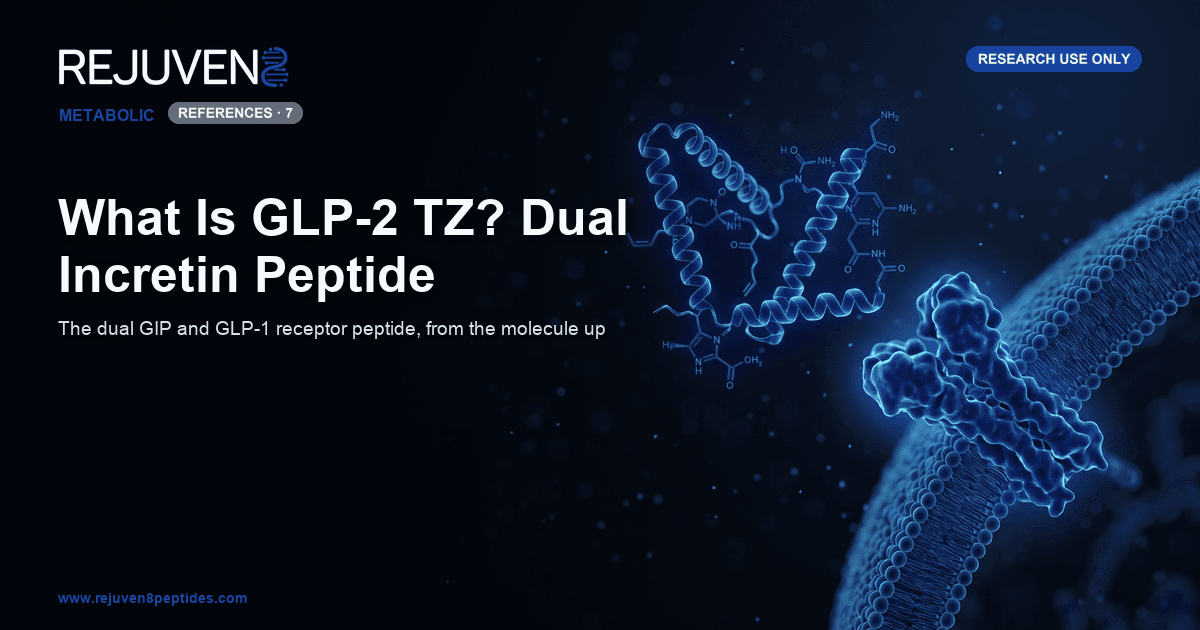
GLP-2 TZ research refers to laboratory investigation of a long-acting glucagon-like peptide-2 (GLP-2) receptor agonist research peptide. The parent molecule, GLP-2, is a 33-amino-acid proglucagon-derived peptide secreted by intestinal L-cells. Since its identification in the mid-1990s by Drucker and colleagues, GLP-2 has become one of the most-studied intestinotrophic factors in gastrointestinal biology, owing to its capacity to drive crypt cell proliferation, expand mucosal surface area, and improve barrier function in preclinical models.
Native GLP-2 has a plasma half-life of only seven minutes, limited by rapid cleavage at the N-terminal alanine by dipeptidyl peptidase-4 (DPP-4). To circumvent this constraint, medicinal chemistry programs produced analogs in which the second residue (alanine) was substituted with glycine — yielding a DPP-4-resistant peptide with a substantially extended duration of action. GLP-2 analog research peptides of this class have become a workhorse tool for investigating GLP-2 receptor biology, intestinal adaptation, and mucosal repair mechanisms in animal models.
This article summarizes the molecular profile of GLP-2 TZ, its mechanism of action at the GLP-2 receptor (GLP-2R), and the principal preclinical research domains in which GLP-2 analog research peptides have been characterized. The discussion also places GLP-2 TZ in context with related proglucagon-derived research peptides and outlines methodological considerations relevant for in vitro and in vivo work.
Historical Development and Discovery
The identification of GLP-2 as a discrete biological entity emerged from the molecular characterization of the proglucagon gene in the early 1980s. Proglucagon was found to encode multiple bioactive peptides — glucagon, GLP-1, and GLP-2 — which are liberated through tissue-specific post-translational processing by prohormone convertase enzymes. In pancreatic alpha-cells, proglucagon processing yields primarily glucagon; in intestinal L-cells, processing yields GLP-1 and GLP-2 in approximately equimolar amounts.
For more than a decade after the sequence of GLP-2 was deduced from the proglucagon precursor, the peptide’s biological function remained largely unknown. The breakthrough came in 1996 when Drucker and colleagues, working with mouse models of glucagonoma-associated intestinal hyperplasia, identified GLP-2 as the proglucagon-derived peptide responsible for the dramatic intestinal growth observed in these models. The finding triggered an explosion of GLP-2 biology research over the subsequent decade, encompassing receptor cloning by Munroe and colleagues, signaling characterization, and the development of DPP-4-resistant analog research peptides.
The medicinal chemistry of GLP-2 analog development paralleled work on GLP-1 analogs occurring at the same time. Both peptides share the same N-terminal alanine that makes them DPP-4 substrates, and the substitution strategies — primarily glycine substitution at position 2 for GLP-2 and α-aminoisobutyric acid substitution at position 2 for GLP-1 analogs — represent independent solutions to the same enzymatic vulnerability. The convergence of these chemistry approaches reflects the broader principle that medicinal chemistry of peptide hormones often centers on stabilizing the molecule against the most aggressive proteolytic vulnerabilities while preserving receptor-binding geometry.
The discovery trajectory has continued through the 2000s and 2010s with the characterization of GLP-2 effects in increasingly diverse preclinical model systems, including large-animal short bowel models in piglets, chemotherapy-induced mucositis models, ischemia-reperfusion injury models, and a growing set of extraintestinal investigations including bone resorption studies and central nervous system mapping work.
Molecular Profile
GLP-2 TZ is a 33-amino-acid linear peptide of the GLP-2 analog class. The defining structural modification relative to native human GLP-2 is the substitution of L-alanine at position 2 with glycine, producing the sequence H-His-Gly-Asp-Gly-Ser-Phe-Ser-Asp-Glu-Met-Asn-Thr-Ile-Leu-Asp-Asn-Leu-Ala-Ala-Arg-Asp-Phe-Ile-Asn-Trp-Leu-Ile-Gln-Thr-Lys-Ile-Thr-Asp-OH. The molecular weight is approximately 3,752 Da.
The Gly²-for-Ala² substitution is functionally critical: DPP-4 cleaves native GLP-2 between residues 2 and 3, inactivating the peptide within minutes. Glycine substitution at position 2 prevents recognition by DPP-4, extending the in vivo half-life from approximately seven minutes to several hours in preclinical models. This pharmacokinetic optimization is what makes GLP-2 analog research peptides practical tools for chronic dosing studies in rodent models of intestinal injury and adaptation.
From a chemistry perspective, the peptide is typically prepared by solid-phase Fmoc synthesis, with downstream HPLC purification to remove deletion sequences and truncation products that can arise during longer-chain synthesis. The amphipathic character of GLP-2 TZ — driven by the central hydrophobic core and charged C-terminal residues — informs reconstitution behavior, with solubility typically improved at near-neutral pH and at concentrations below the aggregation threshold reported for proglucagon-derived peptides. Analytical characterization typically includes confirmation of molecular mass by ESI-MS or MALDI-TOF, amino acid composition analysis, and chromatographic verification of the substitution at position 2.
Mechanism of Action
GLP-2 TZ acts as an agonist at the GLP-2 receptor (GLP-2R), a class B G protein-coupled receptor expressed in enteroendocrine cells, enteric neurons, subepithelial myofibroblasts, and select extraintestinal tissues. GLP-2R signaling is primarily Gαs-coupled, elevating intracellular cyclic AMP and activating downstream kinase cascades including protein kinase A and, indirectly, the IGF-1, ErbB, and keratinocyte growth factor pathways.
A key feature of GLP-2 signaling is that GLP-2R is not expressed on intestinal epithelial stem or progenitor cells themselves. Instead, the receptor sits on neighboring stromal and neuronal cells, which release paracrine mediators — IGF-1, ErbB ligands, and others — that drive crypt cell proliferation and villus growth. Work by Drucker and colleagues established this paracrine relay model and demonstrated that mice lacking the IGF-1 receptor on intestinal epithelium fail to mount the proliferative response to GLP-2 administration.
The receptor architecture of GLP-2R places it within the class B secretin family alongside the GLP-1, GIP, glucagon, and GHRH receptors. The N-terminal extracellular domain is responsible for initial peptide recognition, while the seven-transmembrane core mediates conformational coupling to Gαs and subsequent second-messenger production. This architecture is relevant for researchers using GLP-2 TZ in combination protocols with related proglucagon-derived research peptides such as GLP-1 SM or GLP-3 RT, where receptor-cross-reactivity controls help isolate GLP-2R-specific effects.
Beyond cyclic AMP, GLP-2R signaling has been characterized to involve calcium mobilization, ERK1/2 phosphorylation, and PI3K/Akt activation in some cell systems. The relative contribution of these secondary cascades depends on the cell type and receptor density, and characterization in primary cell systems versus heterologous expression systems can yield somewhat different signaling profiles. This signaling diversity is a relevant consideration when researchers extrapolate from cell line readouts to whole-tissue or whole-animal effects.
Key Research Areas
1. Intestinal Mucosal Growth and Crypt Cell Proliferation
The most extensively documented effect of GLP-2 analog research peptides is robust induction of small intestinal mucosal growth. Drucker et al. (1996) first reported that exogenous GLP-2 administration to mice produced striking increases in small bowel weight, villus height, and crypt depth within days, a finding published in Proceedings of the National Academy of Sciences that catalyzed the entire field of GLP-2 biology (PMID: 8755591). Subsequent rodent studies have shown dose-dependent increases in crypt cell proliferation markers (Ki-67, BrdU incorporation) following GLP-2 analog administration.
Tsai et al. (1997), working in the Brubaker laboratory and publishing in the American Journal of Physiology, characterized the time course and dose-response relationship of GLP-2-induced small intestinal growth in mice, demonstrating that bowel weight gains were apparent within 4 days of administration and continued to increase over 14 days at sustained dosing (PMID: 9252482). This time-course characterization established many of the experimental parameters subsequently used to evaluate long-acting GLP-2 analog research peptides.
Burrin et al. (2000) extended these findings to large-animal models, publishing in the American Journal of Physiology — Gastrointestinal and Liver Physiology a demonstration that GLP-2 infusion in piglets receiving total parenteral nutrition prevented mucosal atrophy and preserved villus architecture (PMID: 11093948). The piglet model has subsequently become a standard preclinical platform for evaluating intestinotrophic activity of GLP-2 analog research peptides at translationally relevant body sizes.
Additional mechanistic work has demonstrated that the proliferative response is accompanied by reductions in epithelial apoptosis, suggesting that the apparent mucosal expansion reflects both increased crypt cell production and decreased cellular loss. This dual mechanism has been confirmed across multiple research models and provides one of the more thoroughly characterized examples of paracrine GPCR signaling driving organ-scale tissue remodeling in adult mammals.
2. Short Bowel Preclinical Models
Short bowel research models — created in rats or pigs by surgical resection of large portions of the small intestine — represent the principal translational context for GLP-2 analog investigation. In these models, the remaining intestinal segment undergoes compensatory adaptation, and GLP-2 analog peptides accelerate and amplify this process. Jeppesen et al., in early translational research summarized in Gastroenterology, demonstrated that GLP-2 administration in short bowel research subjects increased nutrient absorption and improved fluid balance (PMID: 11254493). Long-acting GLP-2 analog research peptides have since become the dominant pharmacological tool for short bowel adaptation studies.
Scott et al. (1998), publishing in the American Journal of Physiology, reported that GLP-2 administration in a rat model of major small bowel resection produced significant increases in mucosal cellularity in the remnant intestine and accelerated functional adaptation as measured by glucose uptake (PMID: 9815018). This early demonstration established the conceptual framework for using GLP-2 analog research peptides as adaptation amplifiers in surgical intestinal models.
The choice of short bowel model — partial small bowel resection versus near-total resection, with or without colonic preservation, with or without ileocecal valve removal — substantially influences the magnitude and timecourse of GLP-2-driven adaptation effects. Researchers selecting models for translational research peptide work typically consider these surgical variables alongside the duration of adaptation period before peptide intervention.
3. Intestinal Barrier Function and Inflammation Models
Beyond mucosal growth, GLP-2 analog research peptides have been investigated for effects on intestinal barrier integrity. Cameron and Perdue (2005) reported that GLP-2 administration reduced epithelial permeability and attenuated mucosal damage in murine models of chemically induced colitis, with associated reductions in inflammatory cytokine expression (PMID: 15833897). Additional preclinical work has examined GLP-2 analog peptides in models of chemotherapy-induced mucositis, ischemia-reperfusion injury, and parenteral-nutrition-associated mucosal atrophy.
Sigalet et al. (2007), publishing in the American Journal of Physiology — Gastrointestinal and Liver Physiology, characterized GLP-2 effects on intestinal inflammation in a rat dextran sulfate sodium (DSS) colitis model, reporting attenuation of histological injury scores and inflammatory cytokine expression (PMID: 17395898). This work helped establish DSS colitis as a tractable inflammation model for evaluating GLP-2 analog research peptides and identified enteric neural pathways as central mediators of GLP-2 anti-inflammatory actions.
4. Bone and Extraintestinal GLP-2R Research
GLP-2 receptors have been identified outside the gut, including in bone tissue, where GLP-2 signaling has been investigated for effects on osteoclast activity and bone turnover markers. Henriksen et al. (2003) reported acute reductions in bone resorption markers following GLP-2 administration in preclinical models, suggesting a potential link between gut peptide signaling and skeletal homeostasis (PMID: 14672354). This extraintestinal research thread remains an active area of inquiry.
Yusta et al. (2000), working in the Drucker laboratory and publishing in Gastroenterology, characterized GLP-2R distribution and signaling in enteroendocrine and stromal cell populations, providing the cellular framework that has guided subsequent extraintestinal GLP-2 receptor investigation (PMID: 10982769).
Comparative Research Landscape
GLP-2 TZ occupies a distinct mechanistic niche within the broader family of proglucagon-derived research peptides. Native GLP-2 and GLP-1 arise from the same proglucagon precursor through tissue-specific post-translational processing, but they engage entirely separate receptors (GLP-2R and GLP-1R) with non-overlapping tissue distributions and downstream physiology. GLP-1 receptor agonist research peptides drive insulin secretion, satiety signaling, and gastric emptying delays; GLP-2 receptor agonist research peptides drive intestinal mucosal growth and barrier function with negligible effects on glucose-stimulated insulin secretion.
Compared with shorter-acting GLP-2 analog research peptides used in early literature, GLP-2 TZ DPP-4-resistant design provides extended receptor engagement that supports practical once-daily or alternate-day dosing protocols in rodent models. Researchers selecting between candidate intestinotrophic research peptides typically evaluate three parameters: relative GLP-2R potency (commonly assessed by cyclic AMP accumulation in GLP-2R-transfected cell lines), in vivo duration of action in pharmacokinetic studies, and the intestinotrophic dose required to achieve a defined increase in small bowel weight in mice.
The compound also sits within a broader pharmacological landscape that includes growth factor-based intestinotrophic research tools — epidermal growth factor, keratinocyte growth factor, and IGF-1 — which engage receptor tyrosine kinases rather than GPCRs. GLP-2 analog research peptides are often preferred for in vivo studies because of their target-cell specificity (the GLP-2R is restricted in distribution), whereas growth factors engage receptors throughout the body and require more careful interpretation of off-target effects.
Combination research protocols pairing GLP-2 analog peptides with growth factor research compounds have been used to investigate additive or synergistic effects on intestinal adaptation. The mechanistic logic for these combinations rests on the observation that GLP-2 signaling primarily affects crypt proliferation through paracrine relay, while direct growth factor administration can engage epithelial cells more directly. The two approaches may therefore complement each other in models requiring maximal adaptation responses.
Research Methodology Considerations
Standard methodological practice for GLP-2 analog research peptide work includes several characterization steps. Receptor binding assays typically use HEK293 or COS-7 cells stably transfected with rat or human GLP-2R, with cyclic AMP accumulation read by HTRF or AlphaScreen as the principal functional endpoint. Native GLP-2 is normally included as a reference agonist, and DPP-4-resistant analogs are evaluated for comparable EC50 values and maximal response amplitude.
In vivo dose-ranging studies in mice typically span a 10- to 100-fold concentration range, with daily or every-other-day dosing protocols over 7 to 14 days and small bowel wet weight as the primary morphometric endpoint. Secondary endpoints include villus height and crypt depth (measured by image analysis of hematoxylin-and-eosin-stained sections), Ki-67 immunohistochemistry for crypt proliferation, and luminal nutrient absorption measured by isotope-labeled D-glucose uptake.
Common pitfalls in GLP-2 analog research include underestimating the importance of vehicle composition (acidified saline or PBS at neutral pH affects solubility and stability differently), failure to account for the rapid clearance of native GLP-2 controls when comparing potency, and inadequate attention to endogenous proglucagon biology in the experimental animal — fasting status and L-cell activity can substantially modulate baseline measurements. Characterization standards typically include peptide identity by mass spectrometry, purity by analytical HPLC at greater than or equal to 98%, and endotoxin testing for any material intended for in vivo administration.
Histological endpoint analysis benefits from standardization across studies. Common practice is to fix segments of duodenum, jejunum, and ileum separately, with measurements taken from a defined number of well-oriented crypt-villus units per segment. Image analysis software with automated measurement tools has improved reproducibility relative to manual measurement, though manual quality-control review remains standard practice for measurements published in peer-reviewed work.
Pharmacokinetics and Bioavailability Considerations
The pharmacokinetic profile of GLP-2 TZ is dominated by the Gly2-for-Ala2 substitution that confers DPP-4 resistance. Following subcutaneous administration in rodent species, GLP-2 TZ shows absorption kinetics consistent with other small-to-medium peptide hormones, with peak plasma concentrations typically reached within one to two hours and an apparent terminal half-life on the order of several hours — a roughly 30-fold extension relative to the seven-minute half-life of native GLP-2.
Plasma protein binding for GLP-2 TZ is modest, distinguishing it from albumin-bound long-acting analog research peptides that achieve half-life extensions of days through reversible serum protein interactions. The molecule undergoes both renal and proteolytic clearance, with the relative contributions varying somewhat across species. Renal clearance can become rate-limiting in models of reduced glomerular filtration, a consideration relevant for studies in aged or surgically modified animals.
Tissue distribution of administered GLP-2 TZ extends throughout the systemic circulation, with measurable receptor engagement reported in intestinal mucosa, enteric neurons, and the extraintestinal sites where GLP-2R is expressed. The compound molecular weight and physicochemical properties limit blood-brain barrier penetration, consistent with the broader profile of class B GPCR peptide ligands. Researchers designing chronic dosing protocols typically use once-daily or every-other-day subcutaneous administration based on the pharmacokinetic profile, with dose adjustment to account for cumulative tissue exposure in long-duration studies.
Plasma concentration measurement is most commonly performed by validated immunoassay or LC-MS/MS, with attention to potential cross-reactivity with endogenous GLP-2 in immunoassay formats. For pharmacokinetic studies in animal models with substantial endogenous proglucagon activity, the analytical method must reliably distinguish the administered analog from native GLP-2 to provide accurate exposure characterization.
Translational Research Context
The translational research context for GLP-2 analog peptides has been shaped by the development trajectory of the class as a whole. The intestinotrophic effects characterized in rodent and porcine preclinical models have informed investigation in short bowel and intestinal failure research, where the GLP-2 axis represents one of the most mechanistically targeted approaches to driving mucosal adaptation. Research peptides of the GLP-2 TZ class have served as essential tool compounds in this translational landscape, providing the pharmacokinetic profile needed for sustained receptor engagement in preclinical models that mirror the chronic-dosing requirements of human intestinal adaptation studies.
Beyond short bowel research, the GLP-2 receptor axis intersects with several other gastrointestinal research domains. Models of chemotherapy-induced mucositis have characterized GLP-2 analog peptides as potential mucosal protectants, with reductions in histological injury scores and faster recovery of villus architecture reported in multiple preclinical systems. Models of inflammatory bowel disease — both chemically induced (DSS, TNBS) and genetic (IL-10 knockout) — have similarly characterized GLP-2 analog peptides as modulators of mucosal barrier integrity and cytokine expression. The breadth of these research applications reflects the foundational role of the GLP-2 receptor axis in intestinal epithelial biology.
The extraintestinal research applications for GLP-2 analog peptides remain less developed than the gastrointestinal literature but represent an active frontier. Bone turnover marker studies, vascular biology investigations, and central nervous system GLP-2 receptor mapping have all expanded in recent years. Researchers entering the field should expect the methodological standards established in the intestinal literature to inform best practices in these adjacent research domains, with appropriate adaptation for the tissue-specific endpoints and dose-response considerations of each context.
Research Considerations for Laboratory Use
Research-grade GLP-2 TZ should be supplied as a lyophilized powder at a purity standard of greater than or equal to 98% by HPLC, with an accompanying Certificate of Analysis documenting peptide content, identity by mass spectrometry, and impurity profile. Lyophilized material is typically stored at -20 degrees C and is stable for extended periods when sealed and protected from moisture.
For reconstitution in research protocols, bacteriostatic water (0.9% benzyl alcohol) or sterile 0.9% saline are commonly used solvents. Reconstituted peptide solutions should be stored at 2-8 degrees C and used within a defined window to minimize aggregation or degradation. Researchers should validate concentration spectrophotometrically and confirm bioactivity in appropriate in vitro assays before in vivo work. All handling should occur under institutional biosafety and animal-care protocols where applicable.
Conclusion
GLP-2 TZ represents a long-acting GLP-2 receptor agonist research peptide of substantial utility for laboratory investigation of intestinal adaptation, mucosal growth, and barrier biology. The compound DPP-4 resistance, conferred by the Gly2-for-Ala2 substitution, makes it well suited for chronic dosing protocols where native GLP-2 rapid degradation would be prohibitive.
The preclinical evidence base spanning intestinal growth, short bowel adaptation, barrier function, and extraintestinal GLP-2R signaling continues to expand. As with all research peptides, the findings described here are derived from in vitro and animal model contexts and should not be extrapolated to human therapeutic claims. Researchers working with GLP-2 analog peptides should design studies aligned with institutional protocols and applicable regulations.
The maturation of GLP-2 receptor pharmacology over the past three decades — from the initial discovery of the peptide biological function in 1996 to the modern array of DPP-4-resistant analog research peptides — exemplifies the productive integration of basic peptide biology, medicinal chemistry, and preclinical research methodology. GLP-2 TZ and related analog research peptides will likely continue to serve as foundational tool compounds in gastrointestinal research for the foreseeable future.
Frequently Asked Questions
What is GLP-2 TZ?
GLP-2 TZ is a long-acting GLP-2 receptor agonist research peptide of the glucagon-like peptide-2 analog class, modified at position 2 to resist dipeptidyl peptidase-4 cleavage. It is used for laboratory study of intestinal mucosal growth and barrier biology.
What research has been conducted on GLP-2 analog peptides?
Preclinical research has investigated GLP-2 analog peptides in models of intestinal mucosal growth, short bowel adaptation, chemotherapy-induced mucositis, colitis, and bone turnover. The foundational mucosal growth findings were published by Drucker and colleagues in the late 1990s.
How is GLP-2 TZ used in research settings?
GLP-2 TZ is typically reconstituted in bacteriostatic water or sterile saline and administered to rodent or porcine research models at doses defined by the specific study protocol. Tissue and serum endpoints commonly include intestinal weight, villus and crypt morphometry, and absorption markers.
What is the purity standard for research-grade GLP-2 TZ?
Research-grade GLP-2 TZ should meet a minimum purity standard of greater than or equal to 98% by HPLC, with a Certificate of Analysis documenting identity by mass spectrometry and impurity profile.
How does GLP-2 TZ compare with native GLP-2 in research contexts?
Native GLP-2 has a plasma half-life of approximately seven minutes due to rapid DPP-4 cleavage, making sustained dosing impractical. GLP-2 TZ, with the Gly2 substitution, extends the half-life to several hours in preclinical species, allowing researchers to maintain GLP-2R engagement across the dosing interval without continuous infusion.
What animal models are commonly used in GLP-2 analog research?
Mouse and rat models are the most common platforms, with small bowel weight, villus height, and crypt depth serving as principal morphometric endpoints. Piglet models are used for translationally relevant short bowel and parenteral-nutrition studies, and DSS or TNBS colitis models are used for barrier function and inflammation research.
How is GLP-2R activation measured in vitro?
GLP-2R-transfected HEK293 or COS-7 cell lines are the standard platforms, with cyclic AMP accumulation (measured by HTRF, AlphaScreen, or radioimmunoassay) serving as the principal functional readout. Receptor binding affinity can be measured using iodinated GLP-2 in competition binding assays.
What are the typical stability and storage conditions for GLP-2 TZ?
Lyophilized GLP-2 TZ is typically stable for extended periods when stored at -20 degrees C protected from light and moisture. Once reconstituted in bacteriostatic water or saline, solutions are generally stored at 2-8 degrees C and used within the stability window documented for the specific peptide lot.
How does GLP-2 TZ relate to other proglucagon-derived research peptides?
GLP-2 and GLP-1 derive from the same proglucagon precursor through tissue-specific processing, but they engage separate receptors and produce different physiology. GLP-2 analog research peptides drive intestinotrophic effects, while GLP-1 receptor agonist research peptides drive insulin secretion and satiety signaling.
Why are histological endpoints important in GLP-2 analog research?
Histological measurements of villus height, crypt depth, and crypt cell proliferation marker expression provide direct evidence of the intestinotrophic response and are considered the gold-standard endpoints in the field. Whole-tissue weight measurements alone can be confounded by hyperemia, edema, or luminal content variations.
References
- Drucker DJ, Erlich P, Asa SL, Brubaker PL. Induction of intestinal epithelial proliferation by glucagon-like peptide 2. Proc Natl Acad Sci USA. 1996;93(15):7911-7916. PMID: 8755591.
- Tsai CH, Hill M, Asa SL, Brubaker PL, Drucker DJ. Intestinal growth-promoting properties of glucagon-like peptide-2 in mice. Am J Physiol. 1997;273(1 Pt 1):E77-E84. PMID: 9252482.
- Burrin DG, Stoll B, Jiang R, et al. GLP-2 stimulates intestinal growth in premature TPN-fed pigs by suppressing proteolysis and apoptosis. Am J Physiol Gastrointest Liver Physiol. 2000;279(6):G1249-G1256. PMID: 11093948.
- Jeppesen PB, Hartmann B, Thulesen J, et al. Glucagon-like peptide 2 improves nutrient absorption and nutritional status in short-bowel patients with no colon. Gastroenterology. 2001;120(4):806-815. PMID: 11254493.
- Scott RB, Kirk D, MacNaughton WK, Meddings JB. GLP-2 augments the adaptive response to massive intestinal resection in rat. Am J Physiol. 1998;275(5):G911-G921. PMID: 9815018.
- Cameron HL, Perdue MH. Stress impairs murine intestinal barrier function: improvement by glucagon-like peptide-2. J Pharmacol Exp Ther. 2005;314(1):214-220. PMID: 15833897.
- Sigalet DL, Wallace LE, Holst JJ, et al. Enteric neural pathways mediate the anti-inflammatory actions of glucagon-like peptide 2. Am J Physiol Gastrointest Liver Physiol. 2007;293(1):G211-G221. PMID: 17395898.
- Henriksen DB, Alexandersen P, Bjarnason NH, et al. Role of gastrointestinal hormones in postprandial reduction of bone resorption. J Bone Miner Res. 2003;18(12):2180-2189. PMID: 14672354.
- Yusta B, Huang L, Munroe D, et al. Enteroendocrine localization of GLP-2 receptor expression in humans and rodents. Gastroenterology. 2000;119(3):744-755. PMID: 10982769.
- Rowland KJ, Brubaker PL. The cryptic mechanism of action of glucagon-like peptide-2. Am J Physiol Gastrointest Liver Physiol. 2011;301(1):G1-G8. PMID: 21527727.
- Drucker DJ, Yusta B. Physiology and pharmacology of the enteroendocrine hormone glucagon-like peptide-2. Annu Rev Physiol. 2014;76:561-583. PMID: 24161075.
- Bremholm L, Hornum M, Henriksen BM, et al. Glucagon-like peptide-2 increases mesenteric blood flow in humans. Scand J Gastroenterol. 2009;44(3):314-319. PMID: 19005872.