Research Use Only. The information presented here is for scientific and educational purposes. These compounds are not intended for human consumption, self-administration, or therapeutic use.
Introduction
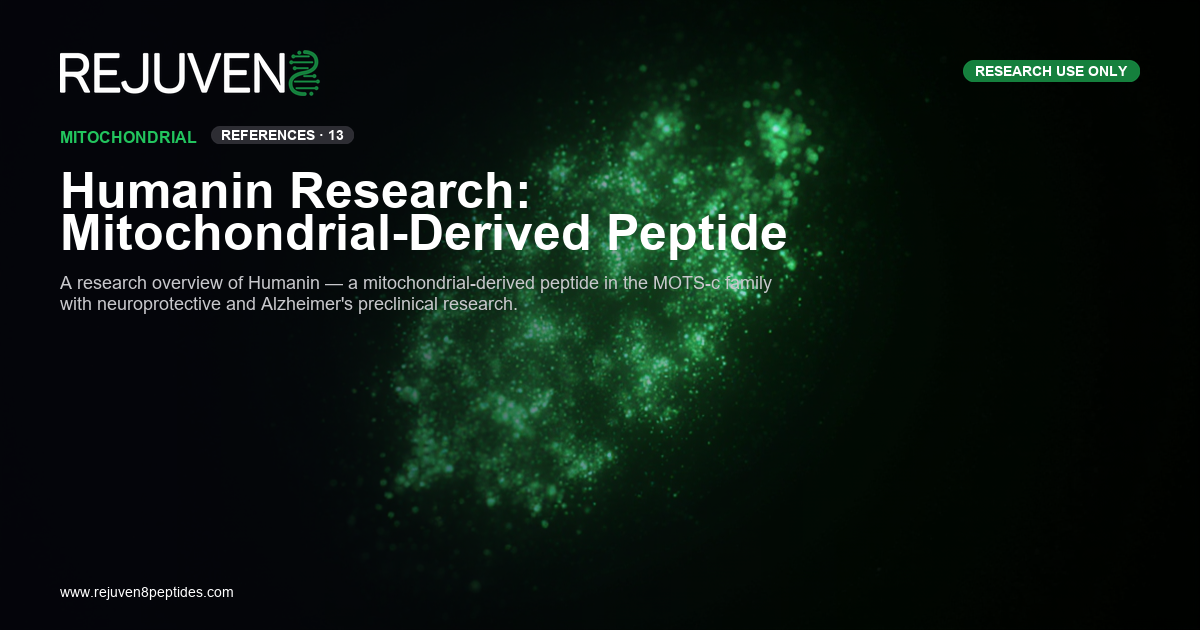
Humanin is a 24-amino-acid peptide originally identified in 2001 by Yuichi Hashimoto in the laboratory of Ikuo Nishimoto at Keio University, through a functional expression screen of cDNA libraries constructed from postmortem occipital lobe tissue of an Alzheimer’s disease patient. The discovery work, published in the Proceedings of the National Academy of Sciences, identified Humanin as a “rescue factor” capable of abolishing neuronal cell death induced by multiple familial Alzheimer’s disease (FAD) genes and by amyloid-β peptides. Humanin research therefore began at the intersection of Alzheimer’s disease cell biology and what would later become a defined field of mitochondrial-derived peptide (MDP) research.
Humanin is now recognized as the founding member of the mitochondrial-derived peptide family, a group of short peptides encoded within the mitochondrial DNA genome and translated through non-canonical mechanisms. Other members of this family, including MOTS-c and the SHLP peptides, share with Humanin a common origin in mitochondrial open reading frames and a developing literature on roles in metabolism, stress resistance, and neuroprotection. The peptide’s history is unusual within neurobiology in that it was identified through phenotype-driven cellular rescue screens rather than through sequence or expression analysis, a methodology that has since been applied to identify additional cytoprotective factors in postmortem neurological disease tissue.
The conceptual framework around Humanin has shifted substantially over the two decades following its initial description. Early work focused narrowly on Alzheimer’s disease cell biology and the question of whether endogenous rescue factors could be identified in diseased brain tissue. Subsequent investigation has positioned Humanin as part of a broader system of mitochondrial-nuclear communication, with circulating levels of the peptide reported to decline with age in rodents and humans and to correlate inversely with several biomarkers of metabolic dysfunction. This translational arc — from Alzheimer’s rescue factor to systemic regulator of stress resistance and aging biology — illustrates how a single research peptide can anchor multiple distinct investigative programs.
This article reviews the published preclinical record on Humanin research, its proposed mechanisms, the comparative landscape of related research peptides, and the laboratory considerations relevant to investigators planning experiments with this compound.
Molecular Profile
Humanin carries the amino acid sequence Met-Ala-Pro-Arg-Gly-Phe-Ser-Cys-Leu-Leu-Leu-Leu-Thr-Ser-Glu-Ile-Asp-Leu-Pro-Val-Lys-Arg-Arg-Ala (single-letter code: MAPRGFSCLLLLTSEIDLPVKRRA). The peptide consists of 24 amino acid residues with a molecular formula of C₁₂₆H₂₁₂N₃₈O₃₃S and a molecular weight of approximately 2,687.16 Da. The sequence is encoded within the mitochondrial 16S ribosomal RNA gene and is translated through a non-canonical mechanism.
A potency-enhanced variant, HNG (in which serine at position 14 is replaced with glycine), is widely used in preclinical research because of its substantially increased neuroprotective potency in standard cellular assays. The compound is water-soluble and is supplied as a lyophilized white powder produced by solid-phase peptide synthesis. The presence of a cysteine residue (Cys-8) introduces the possibility of oxidative dimerization during storage and handling, which should be considered in experimental design.
Mechanism of Action
The mechanistic literature on Humanin has identified multiple receptor and binding-protein interactions. The peptide is reported to bind a heterotrimeric cell-surface receptor complex comprising CNTFR (ciliary neurotrophic factor receptor), WSX-1, and gp130 — the same gp130 subunit shared by the IL-6 cytokine receptor family. Activation of this complex engages STAT3 signaling and downstream antiapoptotic gene expression in neural cells.
A second well-characterized interaction is with the pro-apoptotic Bcl-2 family protein BAX. Humanin has been reported to bind directly to BAX, inhibiting its mitochondrial translocation and the resulting permeabilization of the outer mitochondrial membrane that initiates intrinsic apoptosis cascades. A third interaction is with insulin-like growth factor binding protein 3 (IGFBP-3), reported by Ikonen M., Liu B., Hashimoto Y., et al. in PNAS (2003), linking Humanin to the IGF signaling axis.
The foundational discovery work was published by Hashimoto Y., Niikura T., Tajima H., et al. in PNAS (2001), establishing Humanin as a rescue factor that abolishes neuronal cell death induced by multiple familial Alzheimer’s disease genes and amyloid-β.
A fourth mechanistic dimension involves direct interaction with mitochondrial bioenergetic machinery. Humanin and its analogs have been reported to influence mitochondrial membrane potential, modulate the assembly state of the BAX/BAK apoptotic pore, and engage with elements of the mitochondrial unfolded protein response (mtUPR). These effects place Humanin at a node connecting cytosolic survival signaling, mitochondrial homeostasis, and the broader cellular stress response. Because Humanin’s coding sequence overlaps with the 16S ribosomal RNA gene, several investigators have explored whether the peptide also has noncoding regulatory functions tied to mitochondrial ribosome assembly, though this question remains less developed than the receptor and BAX-binding literature.
Key Research Areas
1. Alzheimer’s Disease Preclinical Models
The foundational and most extensively cited Humanin research concerns Alzheimer’s disease preclinical models. Hashimoto Y., Niikura T., Tajima H., et al. (2001), publishing in PNAS, reported that Humanin abolished neuronal cell death induced by multiple familial Alzheimer’s disease genes (APP V642I, M146L PS1, N141I PS2) and by amyloid-β peptides in cultured neuron systems. Subsequent work characterized the structure-activity relationships of Humanin variants and identified the more potent HNG variant, which has since become the standard analog for sensitive cellular assays. The structure-activity work mapped the minimum sequence required for neuroprotective activity and identified residues critical for both receptor binding and intracellular BAX engagement, generating a panel of fragments and substitution variants now used as positive and negative controls in mechanistic studies.
Beyond cell-culture neuroprotection, Humanin has been examined in rodent models of cognitive function and amyloid pathology. In vivo administration of HNG via intracerebroventricular, intraperitoneal, or intranasal routes has been reported to attenuate amyloid-β-induced cognitive deficits in passive avoidance, Morris water maze, and Y-maze behavioral tests. The intranasal route has received particular attention because of the relative ease with which short peptides can access the central nervous system through the olfactory and trigeminal pathways while bypassing systemic enzymatic degradation. Histological readouts in these in vivo studies have included measurements of hippocampal neuronal density, synaptic marker expression (synaptophysin, PSD-95), and inflammatory cell activation in regions of amyloid deposition. The cumulative preclinical literature supports continued Humanin investigation as a tool compound for probing the molecular and cellular basis of amyloid-associated neurodegeneration.
A 2002 PNAS paper by Tajima H., Niikura T., Hashimoto Y., et al. provided evidence for in vivo production of Humanin peptide in human and animal tissues, supporting its identification as an endogenous factor rather than solely a synthetic research peptide. More recent reviews, including a 2023 publication in International Journal of Molecular Sciences by Conte M., Sabbatinelli J., Chiariello A., et al., have consolidated the neuroprotective literature on Humanin and its analogues. Work by Niikura T., Chiba T., Aiso S., Matsuoka M., Nishimoto I. (2004) in Journal of Neuroscience Research characterized cellular signaling triggered by Humanin in cultured neurons exposed to amyloid-β, demonstrating activation of STAT3 and downstream antiapoptotic gene programs. A 2024 study by Romeo M., Stravalaci M., Beeg M., et al. further extended the literature by examining the direct interaction between Humanin and toxic amyloid oligomers, suggesting a chaperone-like activity that complements receptor-mediated signaling.
2. Mitochondrial-Derived Peptide (MDP) Family Research
Humanin’s recognition as the founding member of a broader family of mitochondrial-derived peptides has opened a substantial research domain. Lee C., Yen K., Cohen P. have published extensively on the MDP family, including a key 2013 paper in Cell Metabolism introducing MOTS-c as a second mitochondrial-derived peptide with metabolic functions. The MDP framework provides a unified mechanistic context for Humanin research and connects neural and metabolic biology through the common origin in mitochondrial open reading frames. The discovery that mitochondrial DNA encodes biologically active peptides beyond the 13 long-recognized electron transport chain subunits has redirected substantial attention toward systematic mining of mitochondrial small open reading frames, and several additional candidate MDPs are currently under investigation in multiple laboratories.
The family has continued to expand. Cobb L.J., Lee C., Xiao J., et al. (2016), publishing in Aging, characterized six additional mitochondrial-encoded peptides — designated SHLP1 through SHLP6 (small humanin-like peptides) — through in silico screening of mitochondrial open reading frames followed by synthesis and bioactivity confirmation. The SHLP peptides display partially overlapping but distinct profiles of cytoprotective, insulin-sensitizing, and apoptotic activity, supporting the concept that humanin sits within a coordinated network of mitochondrial-derived signaling peptides. For investigators studying related mitochondrial-derived peptides, MOTS-c is the most extensively investigated MDP after Humanin and offers a complementary research tool for investigators interested in mitonuclear communication, insulin sensitization, and AMPK-related signaling.
3. Lifespan, Healthspan, and Aging Research
A 2020 paper by Yen K., Wan J., Mehta H.H., et al. in Scientific Reports reported that the mitochondrial-derived peptide humanin is a regulator of lifespan and healthspan parameters in invertebrate and rodent models. The paper described an inverse relationship between circulating Humanin levels and biological aging biomarkers, and reported lifespan extension following Humanin analog administration in nematode models. The findings have expanded the framework for Humanin research from a narrow neuroprotective focus to broader aging biology.
Muzumdar R.H., Huffman D.M., Atzmon G., Barzilai N., et al. (2009), publishing in PLoS One, reported an age-dependent decline in circulating Humanin levels in rodents and described improvements in glucose homeostasis following peripheral Humanin analog administration in older mice. Kuliawat R., Klein L., Gong Z., Nicoletta-Gentile M., Nemkal A., Cui L., Bastie C., Su Y., Zhang Y., Tang W., Surana P., Atzmon G., Barzilai N., Muzumdar R. (2013) extended this literature in FASEB Journal by characterizing Humanin’s effects on pancreatic islet function, linking the peptide to glucose-stimulated insulin secretion and beta-cell survival in preclinical metabolic models.
Comparative gene expression analyses in long-lived rodent models and in centenarian cohorts have reported elevated baseline Humanin transcript and circulating peptide levels in association with extended lifespan and reduced age-related disease burden. The peptide has thus been positioned within a broader class of putative longevity-associated factors that also includes klotho, FGF21, and the sirtuin family of NAD-dependent deacetylases. While Humanin’s specific contribution to organismal lifespan extension remains an active area of investigation, the convergence of multiple lines of evidence — declining circulating levels with age, lifespan extension in nematode supplementation studies, and beneficial effects on metabolic and neuronal endpoints in aged rodents — supports its continued investigation as a tool compound in aging biology.
4. Mechanistic and Receptor Biology Research
The receptor pharmacology of Humanin continues to be an active area of investigation. Studies have characterized the heterotrimeric CNTFR/WSX-1/gp130 receptor complex, the direct BAX-binding interaction relevant to mitochondrial apoptosis pathways, and the IGFBP-3 interaction linking Humanin to the IGF axis. Guo B., Zhai D., Cabezas E., Welsh K., Nouraini S., Satterthwait A.C., Reed J.C. (2003), publishing in Nature, provided the foundational biochemical characterization of the Humanin-BAX interaction and demonstrated that Humanin prevents BAX translocation to the mitochondrial outer membrane in cell-free reconstitution systems. Investigators studying IGF-1 signaling may find this connection a relevant entry point for mechanistic investigation of cross-talk between IGF and mitochondrial peptide signaling pathways. The trimeric receptor model continues to be refined: Hashimoto Y., Kurita M., Aiso S., Nishimoto I., Matsuoka M. (2009) in Molecular Biology of the Cell dissected the relative contributions of CNTFR, WSX-1, and gp130 to Humanin-mediated STAT3 activation, providing a structural framework for the design of receptor-selective Humanin analogs.
Beyond the canonical trimeric complex, Humanin has been reported to interact with formyl peptide receptor-like 1 (FPRL1, also designated FPR2), the same G-protein-coupled receptor engaged by LL-37 and several other immunomodulatory peptides. Engagement of FPRL1 by Humanin has been proposed to mediate chemotactic and immune-modulatory effects distinct from the antiapoptotic activities mediated through the CNTFR/WSX-1/gp130 complex. The full pharmacological picture is thus one in which Humanin acts on at least two separable receptor systems with distinct downstream consequences, raising methodological challenges for investigators attempting to isolate specific signaling axes. Selective receptor antagonists (such as WRW4 for FPRL1) and receptor knockdown approaches are typically required to resolve these contributions in mechanistic experiments.
Intracellular trafficking and degradation pathways for Humanin have received less attention but represent an important area for ongoing investigation. The peptide is presumed to be subject to proteolytic processing by neutral endopeptidase and dipeptidyl peptidase family enzymes, though specific cleavage products and their potential bioactivity have not been comprehensively characterized. Several groups have explored the development of metabolically stabilized Humanin analogs incorporating D-amino acid substitutions, N- and C-terminal modifications, or PEGylation strategies to extend circulating half-life and broaden the experimental window for in vivo pharmacology studies.
Comparative Research Landscape
Humanin sits within a broader landscape of cytoprotective and mitochondrial peptide research compounds, and contextualizing its activity against related research peptides clarifies both its unique features and its mechanistic neighbors. The most direct neighbors are the other mitochondrial-derived peptides: MOTS-c, a 16-amino-acid peptide encoded within MT-RNR1, exerts its principal effects through AMPK activation and exercise-mimetic metabolic signaling rather than receptor-mediated antiapoptotic action; and the SHLP family, whose members share Humanin’s MT-RNR2 genomic origin but display divergent cellular phenotypes ranging from cytoprotection (SHLP2, SHLP3) to pro-apoptotic activity (SHLP6).
Beyond the endogenous MDP class, the synthetic cell-penetrating tetrapeptide SS-31 — which selectively binds cardiolipin on the inner mitochondrial membrane — is frequently studied alongside Humanin in models of oxidative injury, though its mechanism (membrane structural preservation) is distinct from Humanin’s receptor-mediated and BAX-binding activities. In neuroprotection research, Humanin is often compared to short-peptide bioregulators such as Pinealon (Glu-Asp-Arg) and to neurotrophic-axis research peptides including Semax and Selank, although these compounds engage entirely different signaling systems. For investigators interested in cellular survival pathways converging on the mitochondrial permeability transition, Humanin offers a particularly well-characterized BAX-binding mechanism that few other research peptides recapitulate.
Humanin’s positioning as both a cytokine-receptor ligand and a direct apoptotic-pore regulator means it occupies a methodological niche between purely receptor-targeted research peptides (where pharmacological dissection focuses on extracellular binding) and intracellularly acting cytoprotectants (where access to the cytosol becomes the rate-limiting step for activity). Researchers comparing Humanin to other cytoprotective compounds should therefore distinguish carefully between extracellular signaling effects (mediated through receptor binding and downstream STAT3 activation) and intracellular effects (mediated through BAX binding and stabilization of mitochondrial outer membrane integrity). The fact that exogenously applied Humanin and HNG peptides can engage both axes — implying some mechanism of cellular uptake or transcytosis — remains a partially open question that continues to attract investigation.
An additional comparative dimension involves Humanin’s relationship with the IGF axis. The peptide’s documented interaction with IGFBP-3 creates conceptual overlap with research compounds engaging IGF signaling, including IGF-1 and the GHRH-class research peptides (Sermorelin, Tesamorelin, and CJC-1295) whose downstream effects propagate through the GH/IGF-1 axis. Investigators studying convergent signaling at the IGFBP level may find Humanin a useful complementary probe, particularly in contexts where IGF bioavailability is modulated by carrier protein interactions. Within the broader peptide research landscape, Humanin is unusual in straddling categories typically considered distinct — antiapoptotic factor, cytokine-receptor ligand, and metabolic modulator — and this multidimensional profile is part of what has sustained interest across multiple research programs.
Research Methodology Considerations
Investigators planning Humanin research should consider several methodology-specific factors that have shaped the published literature. In cellular assays, the most commonly used readouts include caspase-3 activation, annexin V/PI flow cytometry, MTT and lactate dehydrogenase release for cell viability, and immunoblotting of phospho-STAT3 to confirm receptor pathway engagement. The choice between native Humanin and the more potent HNG analog substantially affects dose ranges: HNG is typically active in the picomolar to low nanomolar range in cultured neuron assays, while native Humanin requires nanomolar to low micromolar concentrations for comparable effects. Failure to account for this potency difference is a common source of inconsistency between reports.
Animal models employed in Humanin research range from invertebrate longevity systems (C. elegans) to rodent models of cerebral ischemia, amyloid toxicity, diet-induced obesity, and accelerated aging. Routes of administration in the published literature include intracerebroventricular infusion for central nervous system endpoints, intraperitoneal and subcutaneous injection for systemic effects on glucose homeostasis and lifespan, and direct in vitro addition for cell-culture assays. A recurring pitfall is the assumption that peripherally administered Humanin reaches the central nervous system at biologically active concentrations; investigators studying CNS endpoints generally require either central administration or use of analogs engineered for enhanced blood-brain barrier permeability.
Dose-ranging studies should include both lower-end concentrations (to establish minimum effective doses) and supraphysiological exposures (to map the upper limits of biological activity and detect potential off-target effects). Because Humanin contains a single cysteine residue at position 8, oxidative dimerization is a known confounder; analytical HPLC and mass spectrometry verification of monomeric peptide content at the time of experimental use is recommended, particularly for stock solutions stored beyond several days. Inclusion of HumaninS7A or other inactive sequence controls helps distinguish receptor-mediated effects from non-specific actions of cationic peptide exposure.
Receptor pathway dissection presents its own methodological challenges. Because Humanin engages a heterotrimeric receptor complex whose components (CNTFR, WSX-1, gp130) participate in multiple cytokine-receptor systems, pharmacological isolation of Humanin-specific signaling requires careful experimental design. Common approaches include the use of CNTFR-blocking antibodies, gp130 knockdown via siRNA, and comparison of effects in cell lines with differential receptor component expression. Investigators studying the BAX-binding mechanism typically employ BAX-knockout or BAX/BAK double-knockout mouse embryonic fibroblasts as a complementary genetic control. STAT3 phosphorylation kinetics provide a sensitive and rapid readout for receptor pathway engagement, while caspase-3 cleavage and cytochrome c release serve as downstream readouts for mitochondrial apoptosis pathway inhibition.
For in vivo work, investigators should be attentive to species-specific differences in Humanin sequence and pharmacology. Rodent Humanin sequences differ from the human peptide at several positions, which can affect cross-species reactivity in receptor binding and downstream signaling assays. Use of species-matched peptide reagents is generally preferred when available, particularly for studies focused on endogenous physiological regulation. Pharmacokinetic considerations include rapid plasma clearance of unmodified Humanin (with reported half-lives in the minutes-to-tens-of-minutes range in rodents), motivating ongoing development of modified analogs with extended circulation times or alternative administration strategies such as continuous infusion via osmotic minipumps for chronic exposure studies.
Research Considerations for Laboratory Use
For investigators working with Humanin in laboratory settings, the peptide’s defined sequence, well-characterized molecular weight, and aqueous solubility simplify handling, though the presence of a cysteine residue introduces the potential for oxidative dimerization that requires attention. Lyophilized material should be stored at −20°C or below prior to reconstitution, with desiccation maintained to prevent moisture-driven degradation. Reconstituted solutions are typically prepared in sterile bacteriostatic water or 0.9% saline, ideally with reducing conditions or storage in inert atmosphere when long-term storage of reconstituted material is required. For aqueous stocks intended for repeated use, single-use aliquots stored at −80°C with minimization of freeze-thaw cycles preserves activity most reliably.
Research-grade Humanin is typically characterized at ≥98% purity by HPLC analysis, with identity confirmed by mass spectrometry (expected molecular weight: 2,687.16 Da for natural Humanin; HNG variants differ in molecular weight by the mass of the substituted residue). Lot-specific certificates of analysis (CoAs) documenting purity, water content, residual solvents, sterility, and verification of monomer vs. dimer state are standard practice for research procurement. Investigators should also be alert to the possibility of trace contamination with truncated synthesis byproducts; these can be detected by careful examination of the HPLC chromatogram and quantified by mass spectrometry, and may affect dose-response relationships particularly at the low end of the active concentration range.
Concentration verification of working stocks by quantitative amino acid analysis or absorbance spectroscopy is recommended for studies where dose precision matters. Humanin’s extinction coefficient at 280 nm is relatively low because the sequence lacks tryptophan and contains only a single tyrosine; nominal concentrations calculated from peptide mass should therefore be cross-checked against a chemical assay when used in quantitative pharmacology experiments. For long-term in vivo studies employing continuous infusion or repeated dosing, characterization of the peptide’s stability in the chosen vehicle at the chosen storage temperature should be performed empirically rather than assumed from manufacturer literature.
Conclusion
Humanin occupies a distinctive position in peptide research: a mitochondrial-encoded 24-amino-acid peptide originally identified through Alzheimer’s disease cell biology, now recognized as the founding member of the mitochondrial-derived peptide family, with a published mechanistic record spanning multiple receptor systems (CNTFR/WSX-1/gp130 complex, BAX, IGFBP-3) and a research literature extending from neuroprotection into aging biology, metabolic regulation, and stress resistance.
For investigators considering Humanin as a research reagent, the published mechanistic record provides a substantial foundation for hypothesis-driven experimentation in neural, metabolic, and aging-related preclinical contexts. The more potent HNG variant is widely used in cellular assays. As with any peptide at the research stage, conclusions about clinical relevance in human systems must be drawn cautiously from preclinical data, and experimental designs should incorporate appropriate controls and validated endpoints.
The next phase of Humanin research is likely to be shaped by improved structural characterization of the proposed receptor complexes, deeper integration with the broader mitochondrial-derived peptide network, and refined understanding of how circulating Humanin levels relate to organismal stress resistance across the lifespan. Cross-disciplinary work integrating mitochondrial biology, neuropeptide pharmacology, and aging research will continue to define the boundaries of the field, with the published preclinical literature serving as both foundation and starting point for ongoing mechanistic investigation.
Frequently Asked Questions
What is Humanin?
Humanin is a 24-amino-acid peptide originally identified in 2001 by Hashimoto and colleagues at Keio University through a functional expression screen of postmortem Alzheimer’s disease brain cDNA libraries. It is encoded within the mitochondrial 16S ribosomal RNA gene and is recognized as the founding member of the mitochondrial-derived peptide (MDP) family. It is produced for research purposes only and is not approved for human or veterinary use.
What research has been conducted on Humanin?
The Humanin research literature spans Alzheimer’s disease preclinical models, neuroprotection in models of amyloid-β toxicity, lifespan and healthspan studies, mitochondrial-derived peptide biology, and detailed receptor pharmacology including interactions with CNTFR/WSX-1/gp130, BAX, and IGFBP-3. Foundational discovery work was published in PNAS in 2001 by Hashimoto, Nishimoto, and colleagues.
How is Humanin used in research settings?
In published preclinical studies, Humanin and its analogues (including the more potent HNG variant) have been administered via subcutaneous, intraperitoneal, and intracerebroventricular routes in rodent models, and added directly to cell culture systems for in vitro studies of neuronal survival, apoptosis pathways, and receptor signaling. Investigators should consult primary literature for model-specific parameters.
What is the purity standard for research-grade Humanin?
Research-grade Humanin is typically characterized at ≥98% purity by HPLC analysis, with identity confirmed by mass spectrometry (expected molecular weight: 2,687.16 Da). Verification of monomeric vs. dimerized state is important given the presence of cysteine in the sequence. Reputable suppliers provide lot-specific certificates of analysis documenting purity, water content, residual solvents, sterility, and oxidation state.
How does the HNG analog of Humanin differ from native Humanin?
HumaninS14G (HNG) is a single-amino-acid substitution variant in which the serine at position 14 is replaced with glycine. The substitution substantially increases the peptide’s potency in standard cellular neuroprotection assays — generally by one to two orders of magnitude — making HNG the preferred analog when assay sensitivity or limited cell numbers favor lower concentrations. The mechanism of the potency enhancement has been attributed to modified receptor binding kinetics and improved conformational stability, though the underlying structural basis continues to be investigated.
What receptors mediate Humanin’s biological activity?
The most extensively characterized receptor complex for Humanin is a heterotrimeric assembly of CNTFR, WSX-1, and gp130, which mediates STAT3-dependent antiapoptotic signaling. Humanin also binds directly to the pro-apoptotic Bcl-2 family protein BAX in the cytosol, preventing BAX translocation to the mitochondrial outer membrane and the resulting permeabilization that triggers intrinsic apoptosis. A third interaction with IGFBP-3 links Humanin to the IGF signaling axis. These multiple binding partners contribute to Humanin’s broad cytoprotective profile across cell types.
How is Humanin connected to the mitochondrial-derived peptide family?
Humanin is the founding member of the mitochondrial-derived peptide (MDP) family, a class of short bioactive peptides encoded within small open reading frames of the mitochondrial genome. Other MDP family members include MOTS-c (encoded within MT-RNR1) and the six SHLP peptides (encoded alongside Humanin within MT-RNR2). The MDPs collectively represent a paradigm shift in mitochondrial biology, demonstrating that the organelle encodes endocrine-like signaling peptides beyond the canonical 13 electron transport chain subunits.
What are the most common challenges in working with Humanin in cell culture?
Three recurring challenges appear in the published literature: oxidative dimerization of the cysteine-8 residue during stock solution storage, non-specific peptide adsorption to glass and certain plastic surfaces, and difficulty distinguishing receptor-mediated effects from secondary actions of cationic peptide exposure. Investigators typically address these issues through prompt analytical verification of monomer content, the use of low-binding polypropylene tubes, and the inclusion of sequence-matched scrambled or inactive analog controls.
What dose ranges have been used in published Humanin research?
Published in vitro studies have employed Humanin at concentrations ranging from picomolar to low micromolar, with the more potent HNG analog active at the lower end of this range. In vivo rodent studies have used doses spanning roughly 0.1 to 10 mg/kg depending on route of administration and endpoint, with intracerebroventricular dosing typically in the microgram range and peripheral subcutaneous or intraperitoneal dosing in the milligram-per-kilogram range. Investigators should consult primary literature for specific protocols matched to their experimental system.
References
- Hashimoto Y, Niikura T, Tajima H, et al. A rescue factor abolishing neuronal cell death by a wide spectrum of familial Alzheimer’s disease genes and Abeta. Proceedings of the National Academy of Sciences. 2001;98(11):6336–6341. PMID: 11371646.
- Tajima H, Niikura T, Hashimoto Y, et al. Evidence for in vivo production of Humanin peptide, a neuroprotective factor against Alzheimer’s disease-related insults. Neuroscience Letters. 2002;324(3):227–231. PMID: 12009529.
- Ikonen M, Liu B, Hashimoto Y, et al. Interaction between the Alzheimer’s survival peptide humanin and insulin-like growth factor-binding protein 3 regulates cell survival and apoptosis. Proceedings of the National Academy of Sciences. 2003;100(22):13042–13047. PMID: 14561895.
- Yen K, Wan J, Mehta HH, et al. Humanin prevents age-related cognitive decline in mice and is associated with improved cognitive age in humans. Scientific Reports. 2018;8(1):14212. PMID: 30242290.
- Lee C, Yen K, Cohen P. Humanin: a harbinger of mitochondrial-derived peptides? Trends in Endocrinology and Metabolism. 2013;24(5):222–228. PMID: 23402768.
- Lee C, Zeng J, Drew BG, et al. The mitochondrial-derived peptide MOTS-c promotes metabolic homeostasis and reduces obesity and insulin resistance. Cell Metabolism. 2015;21(3):443–454. PMID: 25738459.
- Conte M, Sabbatinelli J, Chiariello A, et al. Neuroprotective action of humanin and humanin analogues: research findings and perspectives. Biology (Basel). 2023;12(12):1534. PMID: 38132360.
- Coradduzza D, Congiargiu A, Chen Z, et al. The neuroprotective role of Humanin in Alzheimer’s disease: the molecular effects. Molecules. 2025;30(5):1009. PMID: 40090538.
- Guo B, Zhai D, Cabezas E, et al. Humanin peptide suppresses apoptosis by interfering with Bax activation. Nature. 2003;423(6938):456-461. PMID: 12732850.
- Cobb LJ, Lee C, Xiao J, et al. Naturally occurring mitochondrial-derived peptides are age-dependent regulators of apoptosis, insulin sensitivity, and inflammatory markers. Aging (Albany NY). 2016;8(4):796-809. PMID: 27070352.
- Muzumdar RH, Huffman DM, Atzmon G, et al. Humanin: a novel central regulator of peripheral insulin action. PLoS One. 2009;4(7):e6334. PMID: 19623253.
- Hashimoto Y, Kurita M, Aiso S, Nishimoto I, Matsuoka M. Humanin inhibits neuronal cell death by interacting with a cytokine receptor complex or complexes involving CNTF receptor alpha/WSX-1/gp130. Mol Biol Cell. 2009;20(12):2864-2873. PMID: 19386761.
- Niikura T, Chiba T, Aiso S, Matsuoka M, Nishimoto I. Humanin: after the discovery. Mol Neurobiol. 2004;30(3):327-340. PMID: 15655255.
Humanin is supplied for in vitro and in vivo laboratory research use only. It is not approved for human or veterinary use.