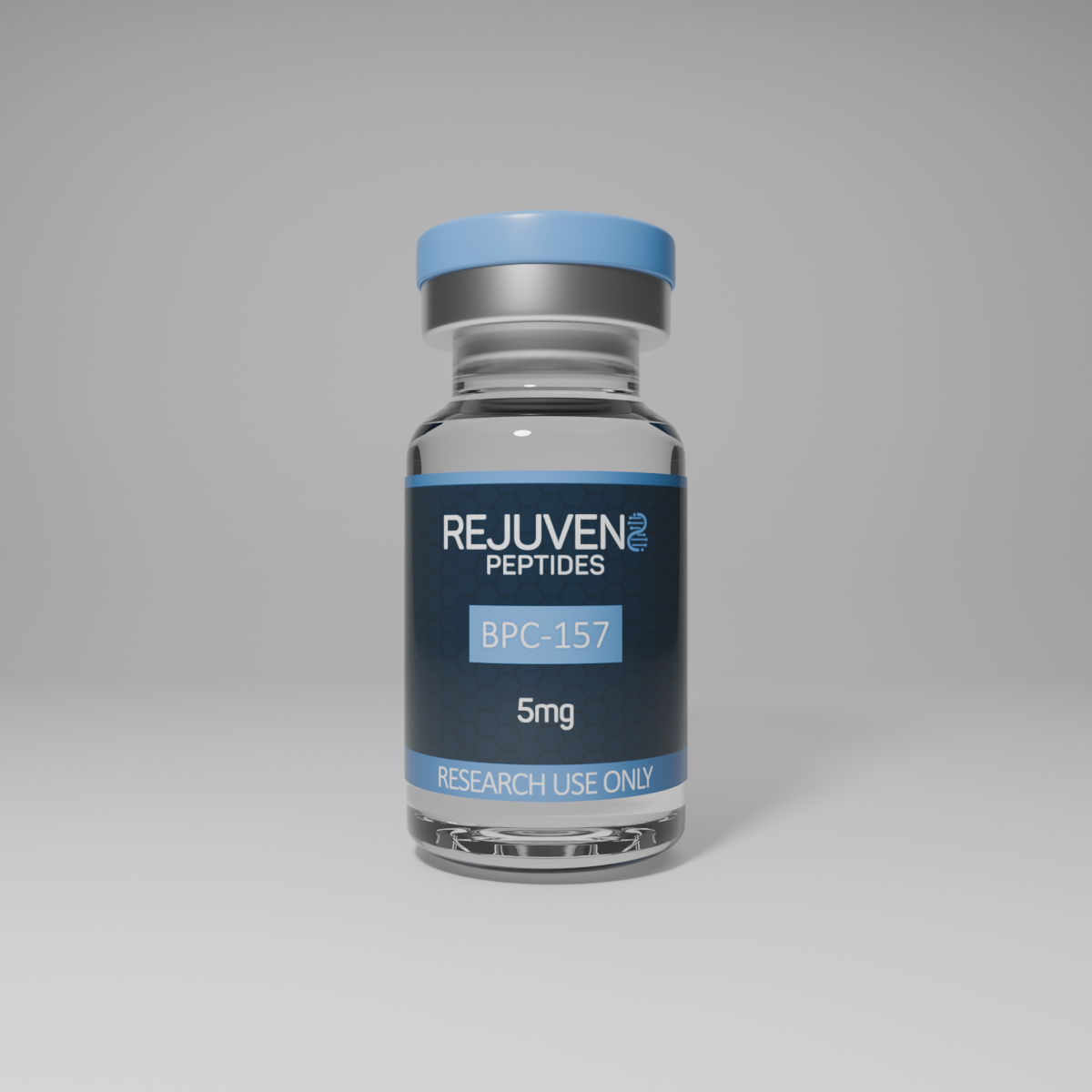
BPC-157 is a synthetic pentadecapeptide studied in preclinical research for tissue-repair signaling, inflammation-pathway modulation, and gastrointestinal cytoprotective mechanisms.
$35.00 – $55.00Price range: $35.00 through $55.00
2 Vials
5% Off
3 Vials
8% Off
5 Vials
12% Off
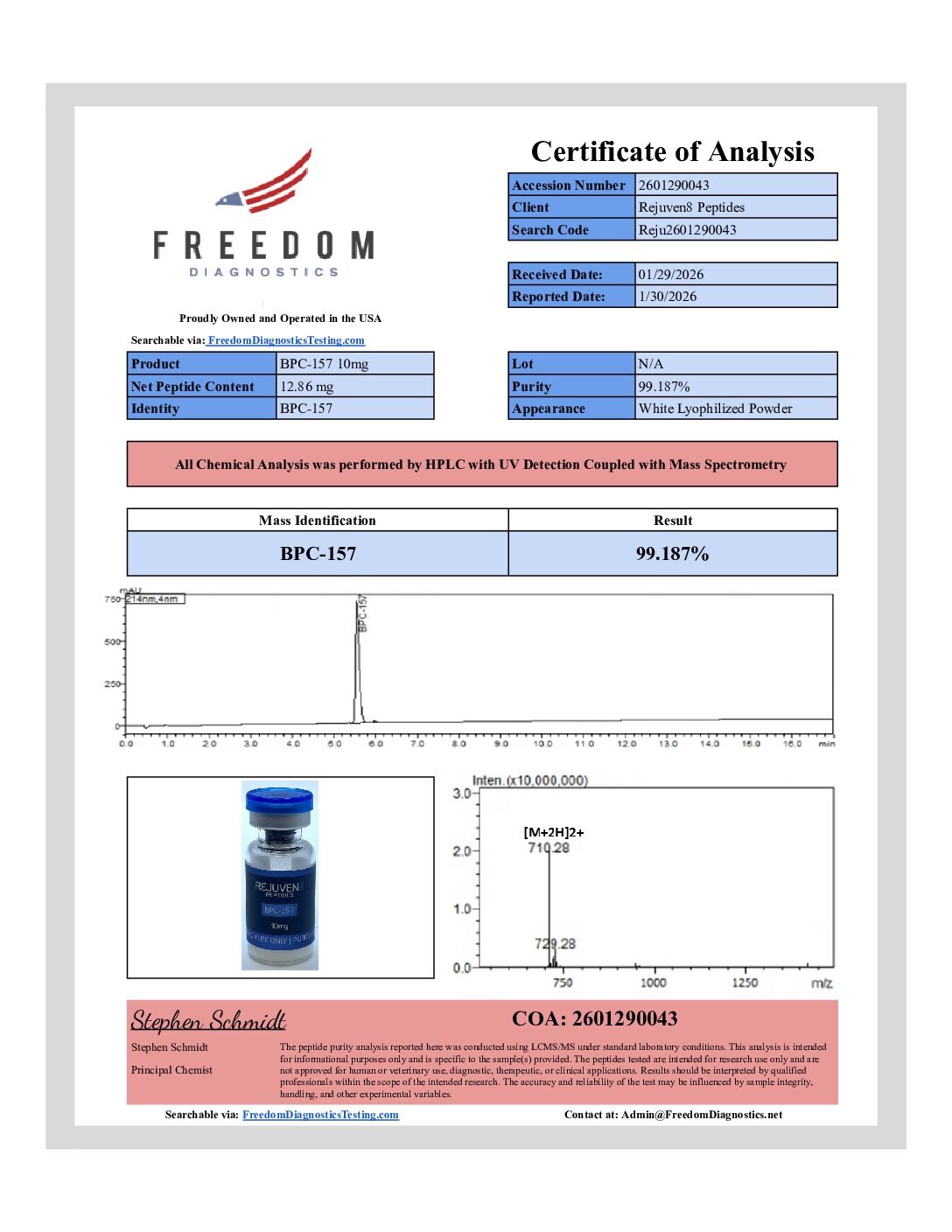
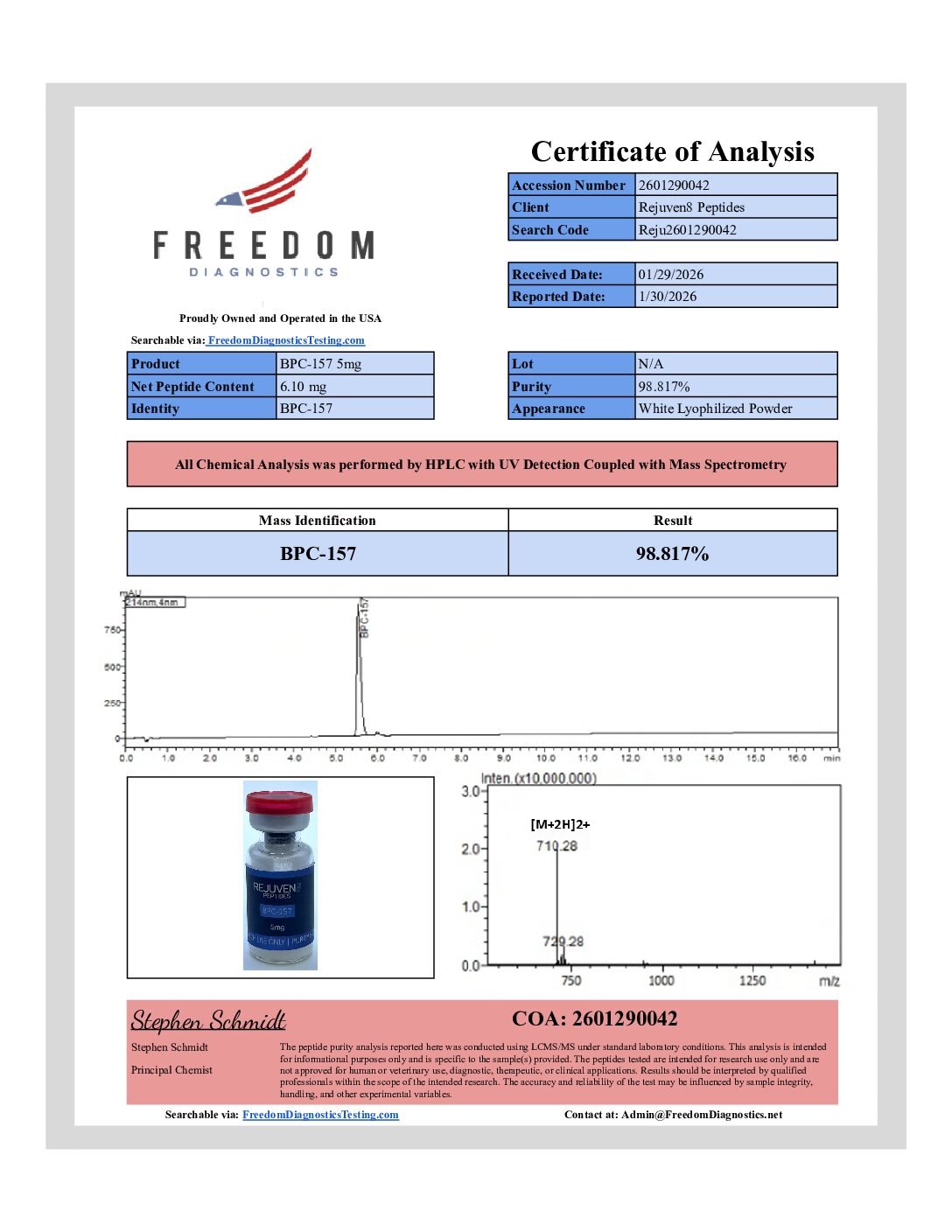
Verified purity data and more—third party tested by Freedom Diagnostics.
Every batch of BPC-157 supplied by Rejuven8 undergoes rigorous batch-specific analytical verification to ensure quality, purity and net peptide content.
✓ ≥99% Analytical Purity
✓ Third-Party Analytical Testing
✓ HPLC Verification
✓ Mass Spectrometry Identity Confirmation
✓ Batch-Specific Certificate of Analysis
Batch testing includes:
• High-Performance Liquid Chromatography (HPLC)
• Mass Spectrometry Identity Verification
• Analytical Purity Confirmation
BPC-157 is a synthetic pentadecapeptide derived from a protective protein originally isolated from gastric juice. In laboratory research settings, this peptide has been investigated for its potential role in angiogenic signaling, connective tissue repair pathways, and gastrointestinal cytoprotective mechanisms.
Due to its unusual structural stability and resistance to degradation in acidic environments, BPC-157 has attracted attention in experimental models studying vascular repair, inflammatory modulation, and soft tissue regeneration.
Preclinical investigations have explored BPC-157 in experimental models studying:
• tendon and ligament repair pathways
• skeletal muscle regeneration signaling
• angiogenesis and vascular growth responses
• gastrointestinal mucosal protection
• inflammatory signaling pathways
Experimental studies examining soft-tissue injury models have reported that BPC-157 may influence microvascular circulation and growth-factor signaling associated with tissue repair processes.
Experimental research suggests BPC-157 interacts with several biological pathways associated with tissue regeneration and cellular repair responses.
Areas of investigation include:
• nitric oxide signaling pathways
• endothelial cell migration and angiogenesis
• fibroblast proliferation
• extracellular matrix remodeling
• inflammatory response modulation
These mechanisms are commonly studied in experimental models involving connective tissue recovery and vascular repair responses.
Compound Name: BPC-157
Peptide Class: Gastric Pentadecapeptide
Sequence: Gly-Glu-Pro-Pro-Pro-Gly-Lys-Pro-Ala-Asp-Asp-Ala-Gly-Leu-Val
Molecular Formula: C62H98N16O22
Molecular Weight: ~1419.5 g/mol
Purity: ≥99%
Testing Methods: HPLC & Mass Spectrometry
Appearance: Lyophilized white powder
CAS Number: 137525-51-0
Each batch undergoes analytical verification to confirm peptide identity, purity, and consistency.
For optimal stability, store lyophilized peptides in a cool, dry environment away from direct light.
Long-term storage conditions may vary depending on laboratory requirements.
Explore the science: BPC-157: a comprehensive review of current research and BPC-157 + TB-500 blend research.
This compound is supplied strictly for laboratory research purposes only.
Not intended for human consumption, therapeutic use, or veterinary use.
Explore additional research peptides that may complement your current areas of study.