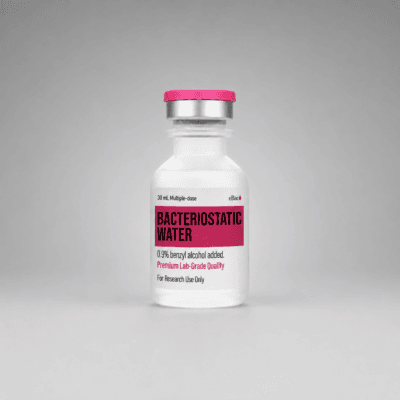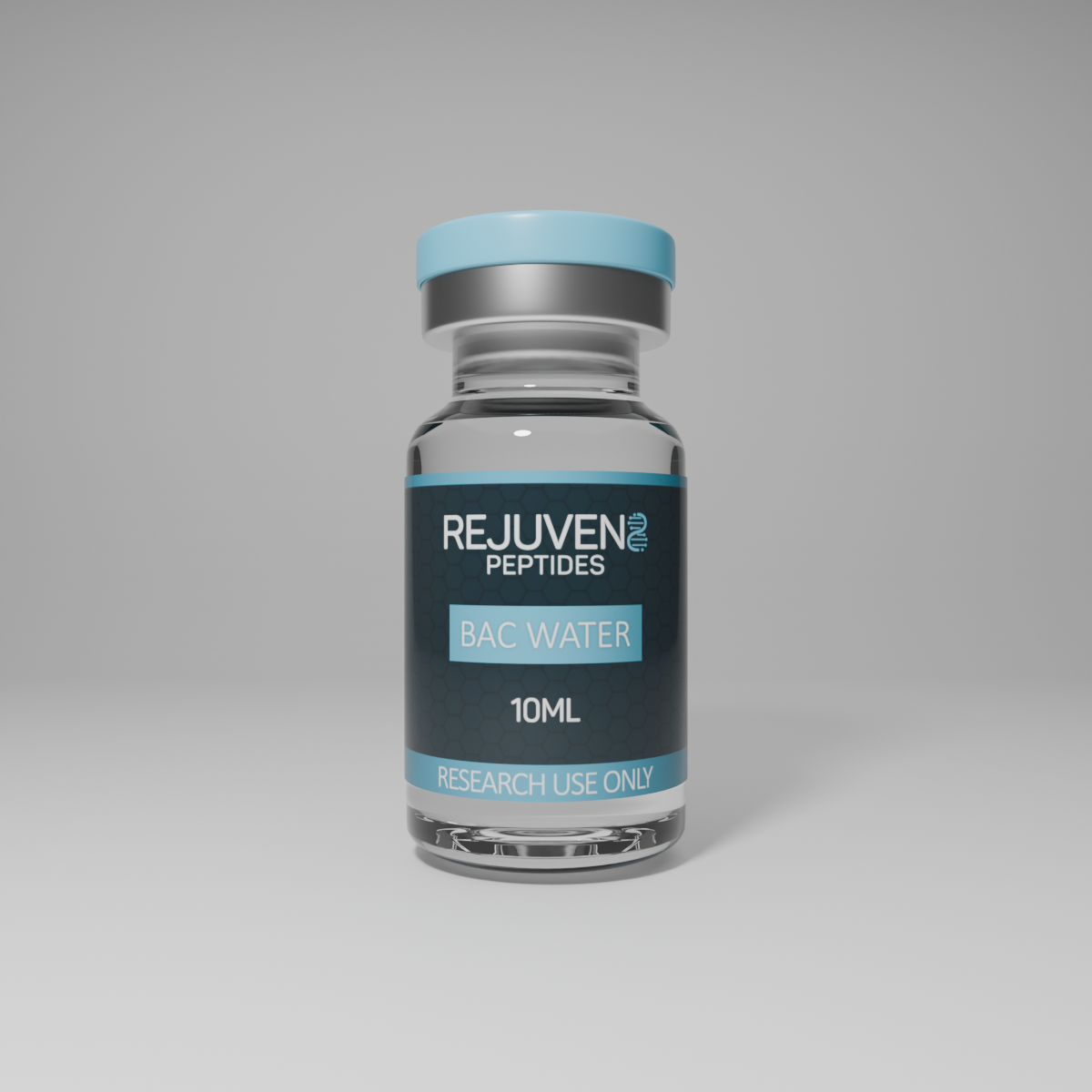
Bacteriostatic Water 10mL is sterile, non-pyrogenic water containing 0.9% benzyl alcohol, used in laboratory research for peptide reconstitution.
$9.95
2 Vials
5% Off
3 Vials
8% Off
5 Vials
12% Off
In stock
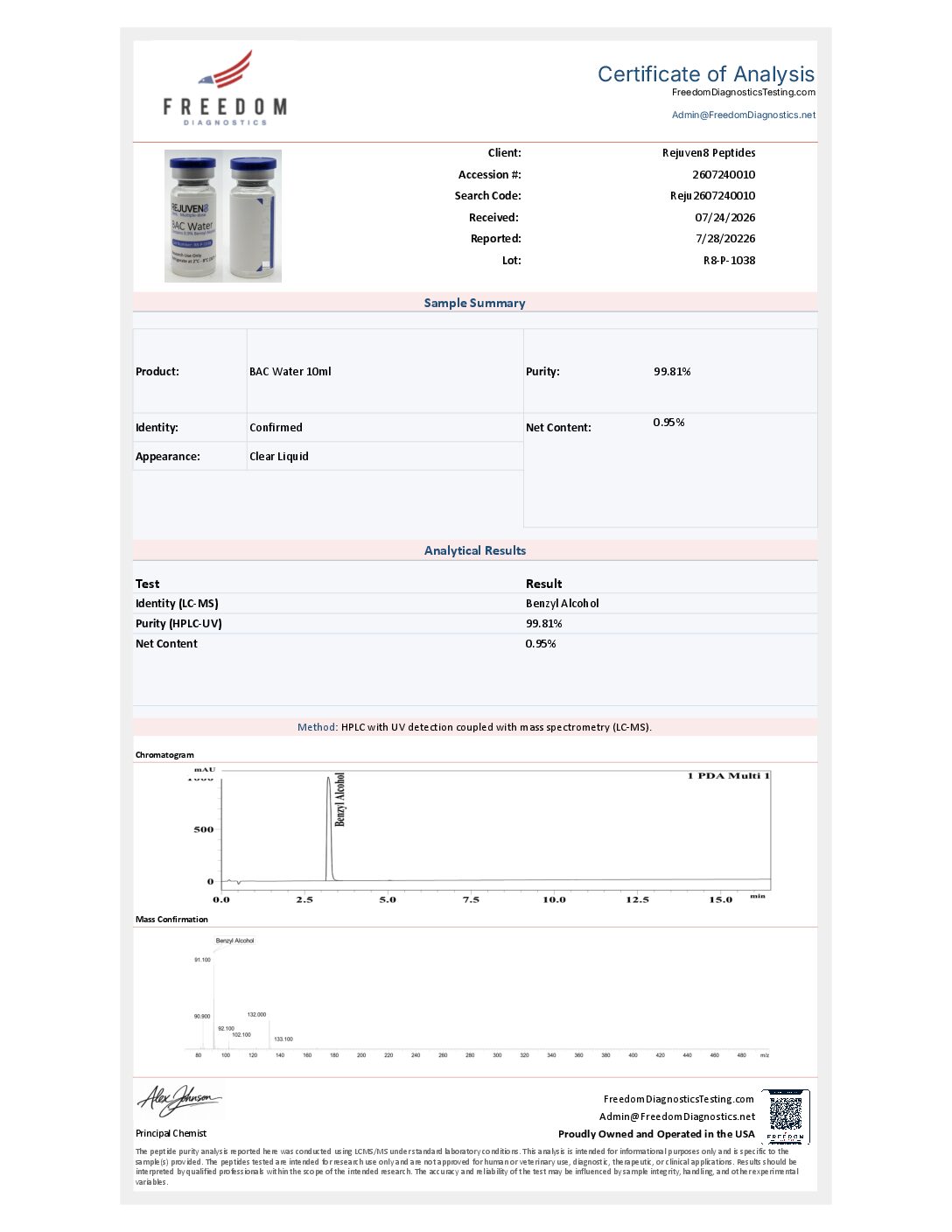
Verified purity data and more—third party tested by Freedom Diagnostics.
RESULT
Bacteriostatic Water (BAC Water) from Rejuven8 Peptides is sterile, non-pyrogenic water containing 0.9 % benzyl alcohol (as a bacteriostatic preservative). It is intended for research and laboratory use only, commonly utilized for the reconstitution of lyophilized peptides and other non-clinical compounds under controlled conditions.
BAC Water provides a clean, stable solvent environment that helps maintain peptide integrity after reconstitution. The addition of benzyl alcohol acts to inhibit bacterial growth, allowing repeated-access laboratory workflows from a single vial when handled in accordance with laboratory best practices.
Bacteriostatic water is sterile, non-pyrogenic water containing 0.9% benzyl alcohol, a preservative that inhibits bacterial growth. That preservative is the only meaningful difference between it and plain sterile water, and it is why a single sealed vial can be accessed repeatedly across a laboratory workflow rather than discarded after one use.
You will see it written several ways: bac water, bacwater, or occasionally misspelled as backwater. It is also sometimes confused with “bacterial water,” which is not an actual product category. All refer to the same thing: sterile water with a bacteriostatic preservative added.
In the laboratory, bacteriostatic water is the standard solvent for reconstituting lyophilized (freeze-dried) research peptides. Nearly every research peptide ships as a dried powder and has to be brought into solution before it can be measured, aliquoted, or analyzed.
Because the benzyl alcohol inhibits bacterial growth, bac water for peptides supports repeated-access withdrawal from one vial while keeping solvent conditions consistent across a study period. This is why it is the default choice for multi-session research workflows. Supplied strictly for research use only.
Both are sterile. The difference is the preservative.
Sterile water for reconstitution contains no preservative. A vial is intended for a single access and is discarded afterward, because nothing in the solution inhibits microbial growth once the seal is broken.
Bacteriostatic water contains 0.9% benzyl alcohol, which inhibits bacterial growth and allows a sealed vial to be accessed multiple times under proper aseptic technique.
For laboratory work that draws from one vial across several sessions, bacteriostatic water is the common choice. For protocols that specifically require a preservative-free solvent, sterile water is used instead.
The volume depends on your vial size and the concentration you want to work at. A single 10mL vial of bacteriostatic water will reconstitute a number of standard research vials, with common working volumes falling between 1mL and 3mL per vial. Larger research programs often move to the 30mL format to reduce the number of vials in rotation.
Rather than estimate, use our free peptide reconstitution calculator to work out concentration, draw volume, and syringe units for your specific vial size.
Rejuven8 Peptides supplies bacteriostatic water in 10mL and 30mL formats. Orders placed before 3PM EST ship the same day with tracking, via USPS or UPS.
If you are comparing suppliers, the things actually worth checking are: whether the benzyl alcohol concentration is stated on the label, whether the vial is sealed and rated for repeated access, whether batch documentation is available for the lot you receive, and whether the supplier is transparent about sourcing. Those four things separate a reliable solvent supply from an unknown one.
Store sealed vials at controlled room temperature, 20 to 25 C, away from direct light. Do not freeze. Once a vial has been accessed, follow your laboratory’s handling practices and observe the stated in-use period.
Note that storage requirements for the solvent and for the reconstituted peptide are different: reconstituted peptide solutions are typically refrigerated at 2 to 8 C, while the unopened bacteriostatic water vial is kept at room temperature.
Yes. It is sterile, non-pyrogenic water. The 0.9% benzyl alcohol is an added preservative that inhibits bacterial growth after the seal is broken; it is not what makes the water sterile in the first place.
Manufacturers commonly state an in-use period of up to 28 days for a multi-access vial held under proper conditions. Follow the labeled period and your laboratory’s own handling standards.
Yes, that is the practical reason the preservative is there. A sealed bacteriostatic water vial can be accessed repeatedly under proper aseptic technique, which is why it is preferred over single-use sterile water for multi-compound workflows.
Unopened vials carry an expiration date printed on the label. Store at controlled room temperature away from light and heat until use.
The solvent itself does not change, but the reconstituted peptide solution has its own stability window, typically 3 to 4 weeks refrigerated depending on the compound. Consult compound-specific stability data.
Explore additional research peptides that may complement your current areas of study.