
Your go-to resource for exploring the latest insights, educational articles, and emerging discussions surrounding commonly researched peptides.
This archive is ideal for readers who want to stay informed, discover new content, and browse structured educational resources in an easy-to-navigate format.
Read research overviews on metabolic and incretin peptides — GLP-1, GLP-2, and GLP-3 receptor agonists and the amylin analog Cagrilintide. These articles cover incretin signaling, glucose regulation, appetite pathways, and multi-receptor agonist pharmacology.
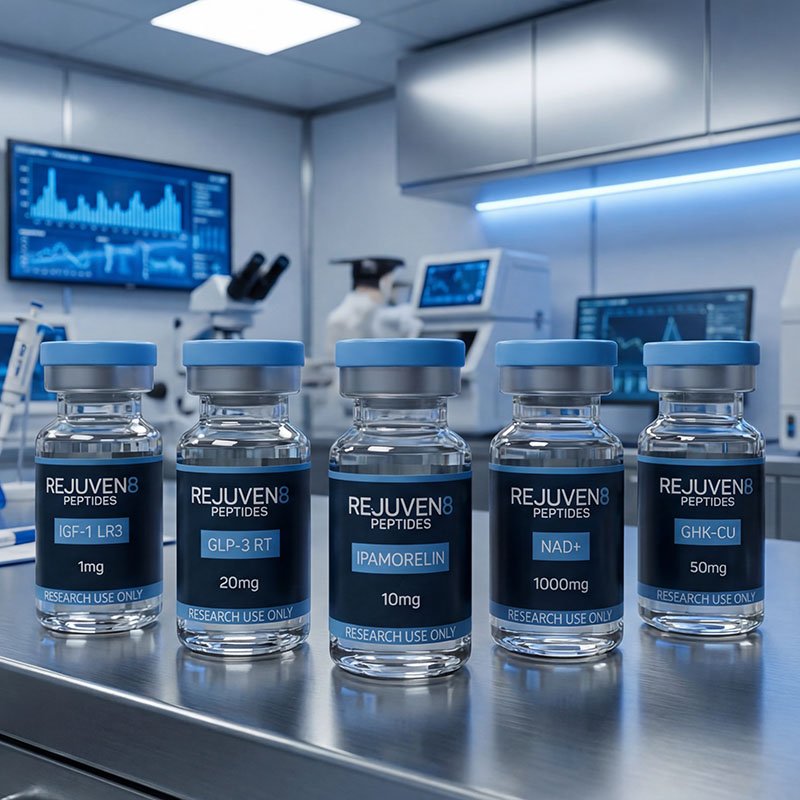
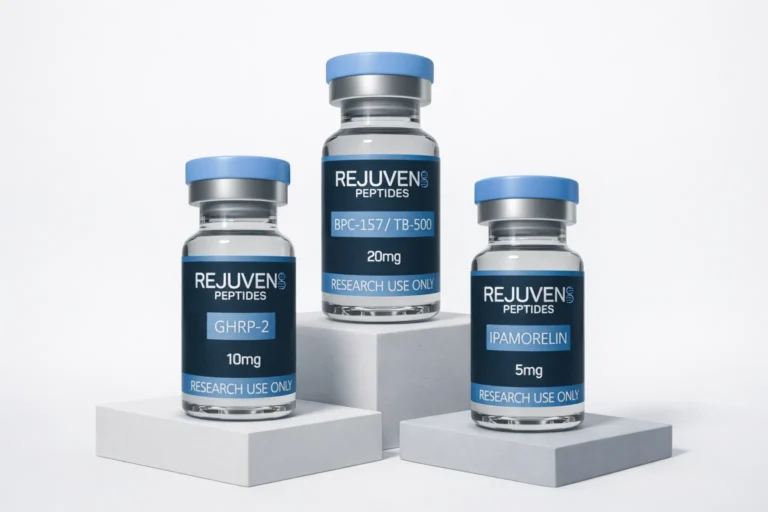
Explore research articles and study reviews on growth hormone axis peptides — GHRH analogs (Sermorelin, CJC-1295, Tesamorelin), growth hormone secretagogues (Ipamorelin, GHRP-2, GHRP-6, Hexarelin), and GH/IGF compounds (AOD-9604, IGF-1 LR3, Follistatin-344). These overviews examine receptor signaling, pulsatile GH release, and the preclinical literature across the somatotropic axis.
Browse the research literature on regenerative and tissue-repair peptides — BPC-157, TB-500, GHK-Cu, and related compounds such as LL-37 and KPV. These studies explore angiogenesis, extracellular-matrix remodeling, collagen signaling, and wound-healing models in preclinical research. For educational and research purposes only.
Explore research articles on melanocortin peptides, Melanotan-2 and PT-141 (Bremelanotide). These reviews examine melanocortin-receptor (MC1R–MC4R) signaling, pigmentation pathways, and the central melanocortin system in preclinical studies.
Read research overviews on neuropeptides and nootropic compounds — Semax, Selank, DSIP, Oxytocin, Pinealon, VIP, and Cerebrolysin. These articles cover CNS signaling, cognition and memory, neuroprotection, stress response, and sleep regulation in preclinical research.

Explore research articles on cellular cofactors and longevity compounds — NAD+, Glutathione, MOTS-c, Humanin, Epitalon, Klotho, and SS-31. These reviews examine mitochondrial biology, redox balance, sirtuin signaling, and the molecular biology of aging.
Read research overviews on multi-peptide blends and combination studies — the GLOW Blend, KLOW Blend, and BPC-157 + TB-500 — plus the principles of peptide stacking and blend characterization. These articles examine the rationale, mechanisms, and experimental design behind co-formulated research peptides.
Browse foundational guides on peptide research methods and quality — how to read a Certificate of Analysis, vet a supplier, and handle reconstitution, lyophilization, storage, and stability. These articles cover HPLC purity, mass spectrometry, DPP-4 resistance, and best practices for reproducible peptide research.
Stay on top of the best practices in the peptide research space to aid in your research.
If you have any additional questions, consider checking out our full FAQ Page or reach out to our team for any further info.
RUO products are not for human or veterinary use, diagnostics, or drugs. They’re sold solely for laboratory, in-vitro, and R&D applications.
Freeze-dried powder form that improves stability and shelf life under proper storage.
Keep sealed and dry. Short term: 2–8 °C (refrigerated). Long term: −20 °C is recommended.
Stability depends on sequence, solvent, pH, and temperature. In general, keep cold, minimize time in solution, and consult literature for your specific peptide.
Hydrophobic sequences may require a small amount of organic solvent (e.g., acetonitrile) before diluting with aqueous buffer. Check literature and handle in a chemical hood.
Yes. Each lot includes a CoA with identity and purity data (e.g. HPLC/LC-MS), listed on both our product pages and quality page. Request via support with your order # if not included.
wTypically HPLC for purity and LC-MS or MS for identity. Some lots may include additional tests (water content, TFA content, endotoxin) where noted.